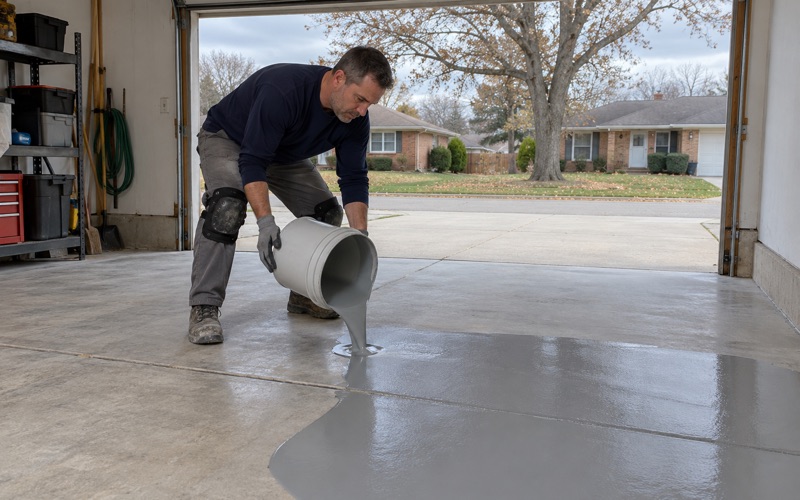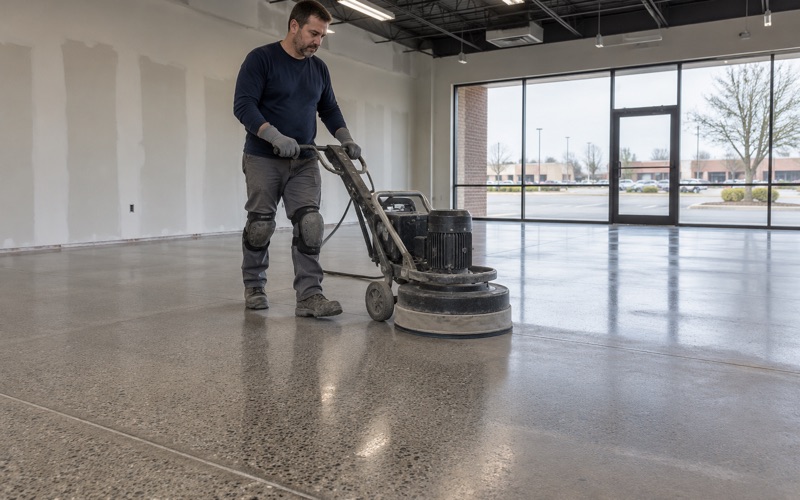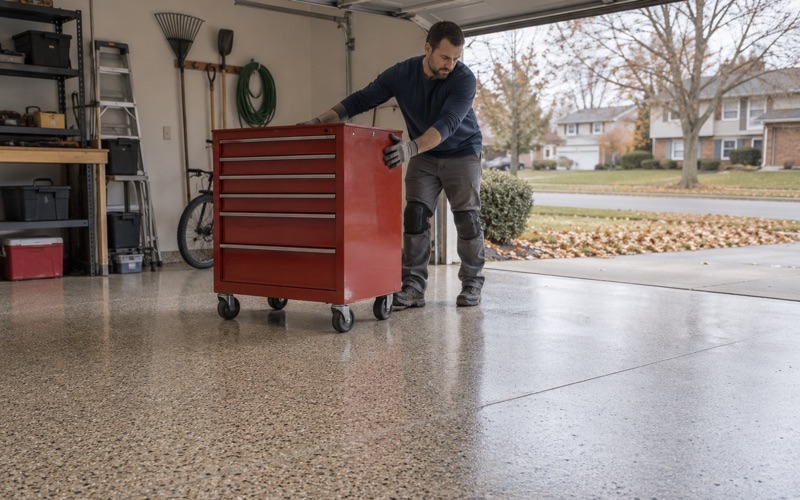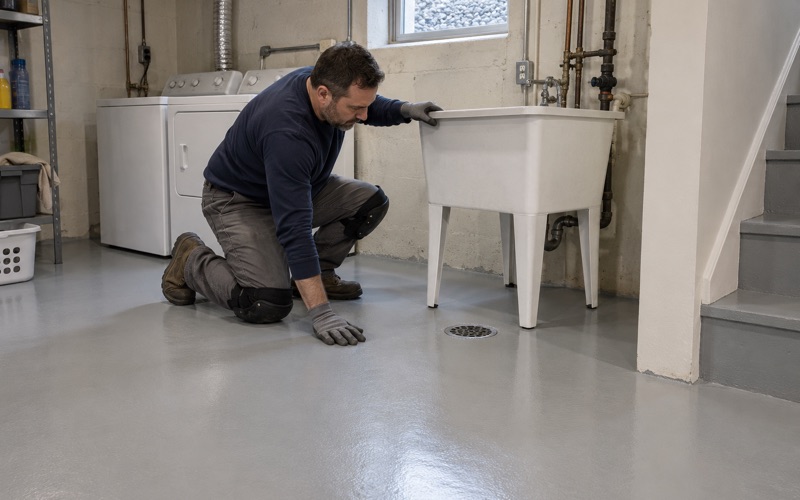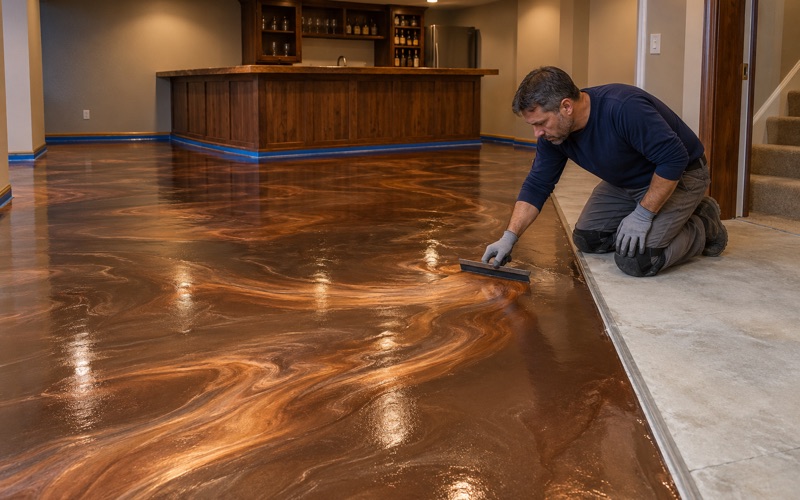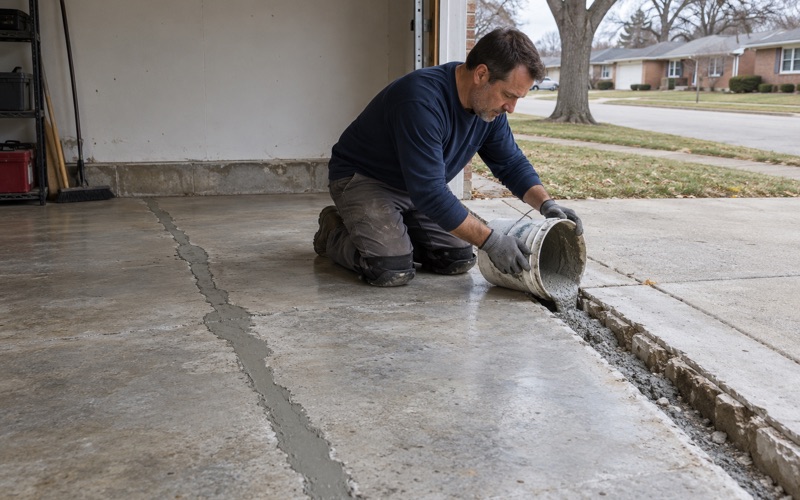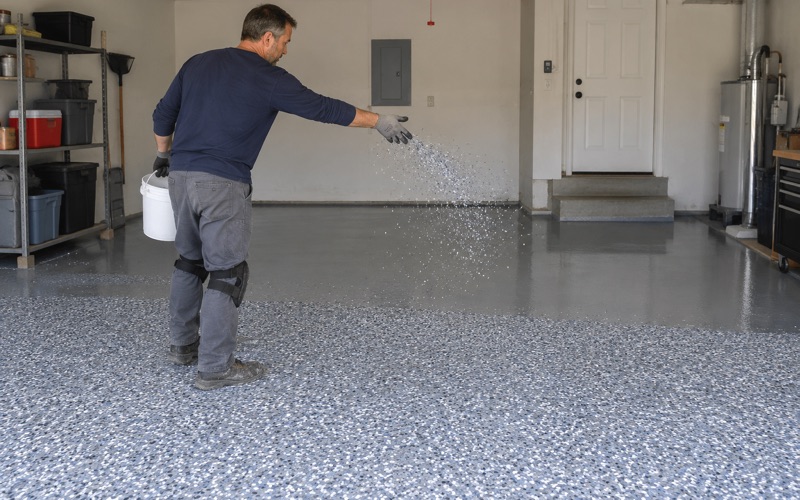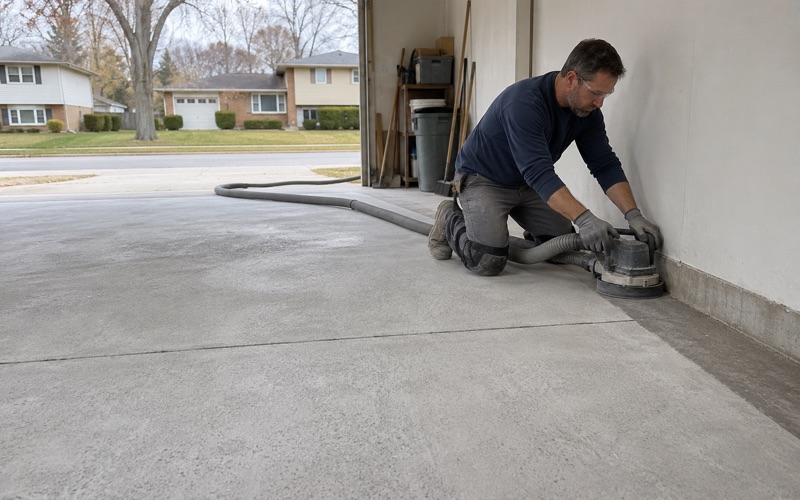
Palatine Epoxy Floors has spent more than 20 years on epoxy-flooring in Winnetka and the rest of the north suburbs, and the floors that teach us the most are the ones that carry real weight and real water. A utility room, a pump room, a public-works garage and a home basement all ask the same question of a coating: what is the slab underneath doing, and will the system stay bonded to it?
We answer that before we price anything. Every slab gets opened with a diamond grinder or a shot blaster to a measured ICRI CSP profile, never acid etched, and moisture testing sits in the written scope as its own line rather than turning up as an apology after a blister. The proposal names the product, the build and the finished thickness, so a facilities manager or a homeowner can hold the installed floor up against the quote.
This page is about the heavy-duty side of the work in this village, which looks different from most suburbs. There is no industrial district here, so the hardest-working floors tend to belong to the public.
Water Since 1893, Power Since 1900
Winnetka is a village in Cook County, 17 miles north of downtown Chicago, and it does something that shapes its floors more than any street map: it runs its own utility. The Winnetka Water & Electric Department has delivered potable water since 1893 and electricity since 1900, from an electric power plant the village owns.
Power leaves that plant through underground cables rather than overhead lines. Since 1991 the village has met its power requirements through contracts with the Illinois Municipal Electric Agency.
For a floor contractor, that history changes the job list. A village that supplies its own water and has generated its own power keeps the kinds of rooms that a suburb buying both from outside would not need: pump rooms, electrical rooms and service bays that are wet, heavy and rarely empty.
Why a Utility This Old Matters to a Floor Contractor
Rooms that serve a long-running utility are usually renovated many times over, and their floors tend to carry the record: old coatings, patched slabs, anchor holes from equipment that moved, and joints cut, filled and cut again. None of that shows in a photo. We walk the slab, read the cracks and the old coating, and say plainly when a section needs repair before it can take a new system.
What We Will and Will Not Say About Public Floors
Nothing on this page describes the condition of any village building or claims one as our work. What we can describe is how floors in generating rooms, pump rooms and service garages behave in general, and how we would approach one if a public or private owner in Winnetka asked.
Looking for epoxy-flooring closer to Northlake? See Epoxy-Flooring Services in Northlake.
What a Generating Room or Pump Room Floor Puts Up With
Rooms that hold pumps, switchgear, transformers or generators are hard on a floor in ways a garage never is. Water is constant around pumps and piping, equipment is heavy and occasionally dragged, and a spill can be oil, glycol or a treatment chemical rather than road grime. The floor also has to be cleaned hard and inspected often. Many of those rooms also run around the clock, so the floor rarely gets a quiet week to dry out.
Wet Rooms Need Texture and Drainage Detail
In a pump room, the usual risks are slip and undercut rather than simple wear. We build a 100% solids epoxy base, broadcast quartz aggregate into it for traction, and lock it in with a topcoat, so the finished floor grips even when it is wet. Around floor drains and sump pits the system is cut into a keyway at every edge, because a coating feathered out at a drain is where water gets underneath first.
Wet rooms are also where hydrostatic pressure and vapor drive show up from below. We test before we coat, using ASTM F2170 in-situ relative humidity probes or ASTM F1869 calcium chloride tests, and if the readings call for it we put down a moisture-mitigation primer instead of hoping the topcoat holds.
Electrical Rooms and Static
Rooms full of switchgear and controls raise a different question: whether the floor should carry static charge away. A standard coating is an insulator. Where the owner’s equipment specification calls for it, a static-dissipative or ESD system is built to a stated resistance range and tested once it cures, and we write that range into the proposal so it can be checked.
Movement, Joints and Honest Limits
Heavy equipment bases, vibration and old control joints all move. A coating is a film that follows the slab beneath it; it will not hold a moving crack shut, and we say that before the work rather than after. Joints that move get a flexible filler and are honored through the new system instead of being buried under it.
Sometimes the Right Answer Is No Coating
Not every utility floor should be coated. In a dry storage room or a vehicle bay where a film would be scratched through by steel equipment feet, a ground and lithium silicate densified slab can be the more durable answer, and we will say so when it is.
Public Buildings, Public Schedules
A water and electric utility does not close for a floor job. Pumps keep running, crews still need the service garage in the morning, and some rooms can only be taken out of use in sections. We plan coating work for buildings like that the way an owner plans an outage: in phases, with each section’s cure time known before the first section is ground.
Fast-Return Systems for Rooms That Cannot Wait
Where downtime is short, a polyaspartic or polyurea topcoat over a properly profiled slab can return a room to foot traffic much sooner than a slow-cure system. Urethane cement is often the better choice where a floor sees hot washdown or thermal shock. The trade-off between speed and build is laid out in the proposal, not decided for the owner.
Hot Tire Pickup in Service Garages
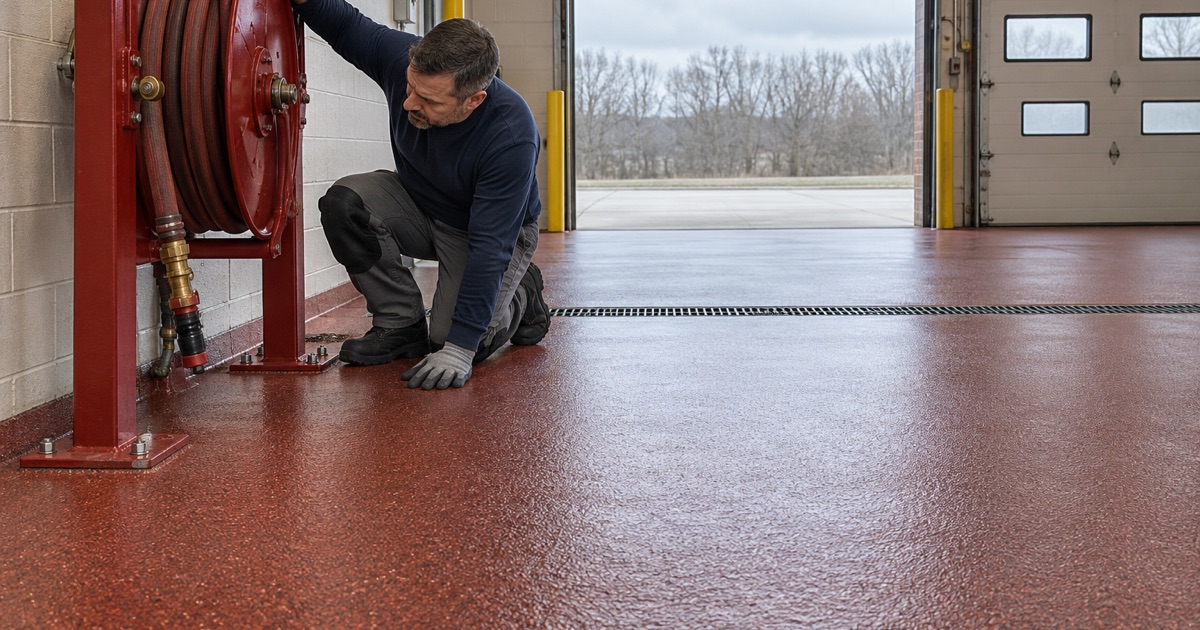
A public-works garage sees vehicles pull in hot after a shift, and hot tires can lift a thin or poorly bonded coating straight off the slab. That is why we profile to the CSP range the system calls for, build to a real thickness rather than a single thin roll coat, and choose a topcoat rated to resist hot tire pickup.
Cure by Conditions, Not the Calendar
A room with constant water and cool pipes can keep a slab’s surface close to the dew point of the air above it. We measure slab temperature and the dew point spread at the surface before every coat, because coating a slab that is too cold or too close to condensation invites amine blush and a weak bond. If the conditions are wrong, the schedule moves.
Dust Control Around Live Equipment
Grinding makes dust, and dust does not belong near running electrical gear or open water. We grind with vacuum-shrouded equipment, seal off the section being worked, and keep the rest of the room usable, which is part of why phased work takes planning rather than a single weekend.
Odor, VOCs and Occupied Buildings
Public buildings stay occupied while we work, so product choice matters beyond performance. Every coating we use falls within the volatile organic compound limits in 35 Ill. Adm. Code Part 223, which bind the installer as well as the manufacturer, and we work inside the hours the village allows for construction noise.
No Industrial District, So the Heavy-Duty Floors Are Civic Ones
In a village with no industrial district, the floors built for real abuse are mostly in public hands. Beyond the utility, that means schools, park buildings and the shops where the village keeps its vehicles and equipment. New Trier High School’s Winnetka campus at 385 Winnetka Avenue, Crow Island School, a National Historic Landmark since 1990, and the facilities of the Winnetka Park District all sit inside the village. None of them is a customer of ours; they are simply the kind of building where a coating faces more than a family car.
School and park buildings bring their own constraints: work windows tied to breaks, rooms that must reopen on a fixed date, and floors cleaned by custodial staff with whatever equipment they have. For floors like these we favor systems that can be recoated after a light sanding rather than a full grind, so the next maintenance cycle is a topcoat, not a tear-out.
Who Inspects Commercial Space Here
Commercial work in Winnetka is small in scale, and it is watched. The Winnetka Fire Department’s Fire Prevention Bureau inspects every business, commercial and multifamily residential building each year and reviews plans for new and remodeled structures, so a shop floor or a mechanical room in a mixed-use building should be planned with that review in mind. We schedule commercial jobs around the hours a building has to stay open.
Food Service Floors
Where a commercial kitchen or food counter is involved, the Illinois Food Code, which adopts the 2022 FDA Food Code, sets the rules. Section 6-201.13 calls for coved junctures between floor and wall where floors are cleaned with water, and we build the cove into the system rather than leaving a seam where grime collects.
Home Garages and Basements Get the Same Discipline
Most Winnetka housing units are detached houses, and the residential work here is mainly garages and basements. The method does not change because the room is smaller: the slab is ground, tested and repaired as needed, and a vinyl flake or quartz broadcast system is built to the thickness written in the proposal.
Every home job also comes with a written contract and the Home Repair: Know Your Consumer Rights pamphlet before work starts, as the Illinois Home Repair and Remodeling Act requires. Illinois licenses no flooring or coatings contractor, so we show the registration, bond and insurance a village asks for instead of a license number. Warranty exclusions are read out before anything is signed, and moisture is the first one named.
Whether the floor belongs to a pump room or a two-car garage, the question at the start is the same one: what is this slab doing? We answer it with a grinder, a meter and a written scope before anyone pays for a coating.
- 20+ Years Coating Concrete
- Moisture Tested Before We Coat
- Free Written Estimates