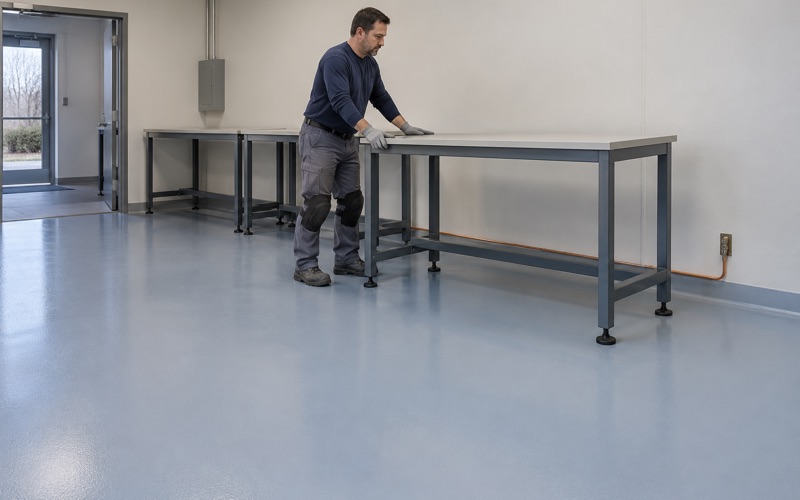
Palatine Epoxy Floors brings more than 20 years of epoxy flooring work to Warrenville, where the commercial side of the market is unusually concentrated. Hotel service corridors, fitness club locker rooms, office break rooms and the loading doors behind them all take a beating that a bare or painted slab does not survive for long.
We plan that kind of job around the hours a building has to stay open, and we review the permit path before a date goes on the calendar, because commercial work here answers to a fire district as well as the city. Homeowners get the same honesty about what a coating can and cannot do.
This page covers what changes about epoxy and polyaspartic floors in Warrenville specifically: where the commercial floors are, who reviews the work, and how we prepare and test a slab before anything is applied. If you are weighing a coating for a lobby, a gym or a garage, the sections below set out what to expect.
A Limestone Quarry That Became a Business District
Warrenville’s commercial floors are concentrated in one place. Cantera was built from the late 1980s under a tax increment financing district on the former grounds of a 650-acre limestone quarry, and today it holds three hotels, three banks, a 100,000-square-foot fitness club, two residential complexes and corporate offices.
The largest employer is a development
The city describes Cantera as its largest employer and a major source of property tax, which is an unusual thing to say about a place rather than a company. The tenants include corporate offices such as BP America and Exelon Nuclear, alongside the hotels and the club, so one development carries floors with very different jobs to do.
For a flooring contractor, that concentration changes the conversation. A hotel, a bank branch and an office building may sit within the same development, yet the right system for each differs in thickness, texture and how long the space can be closed while it cures.
What a former quarry site means for the slab
We do not assume anything about a slab because of what the ground under it used to be. Buildings in a development that has grown since the late 1980s differ in age, construction and prior finishes, so each floor gets the same inspection: cracks mapped, old coatings identified and moisture measured before a number is quoted.
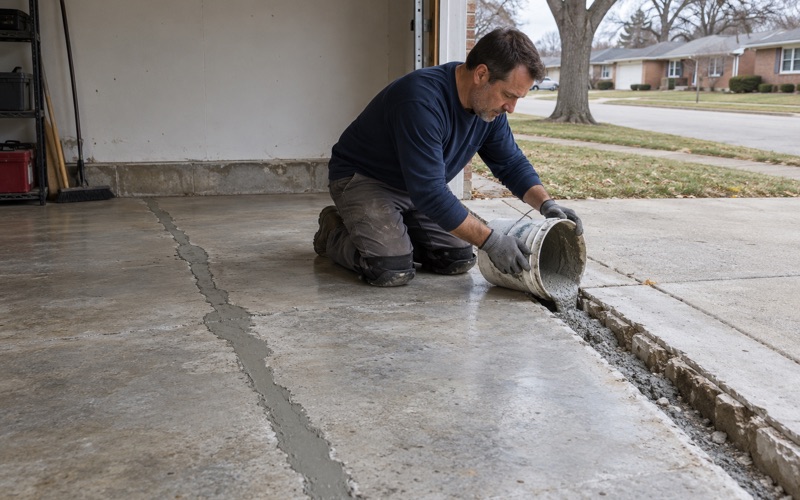
Where a slab needs crack repair or patching before it can be coated, we say so in the proposal rather than burying it under the coating and hoping. A coating is a film that follows the concrete beneath it; it will not hold a moving crack together, and we tell a property manager that before the job, not after.
Looking for epoxy-flooring closer to Campton Hills? See Campton Hills Epoxy-Flooring.
Hotel, Fitness Club and Office Floors
Commercial floors in a development like Cantera split into two kinds: the surfaces guests and members see, and the back-of-house floors that carry carts, pallet jacks and mop water. We scope them separately because they fail for different reasons.
Lobbies, corridors and guest-facing floors
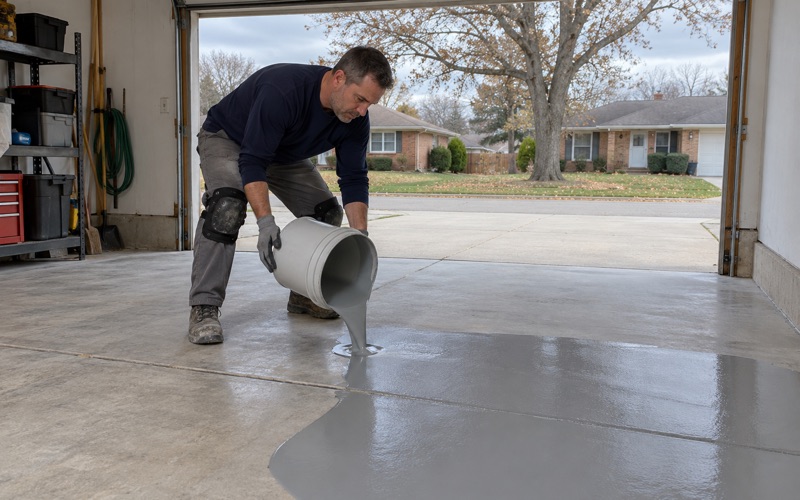
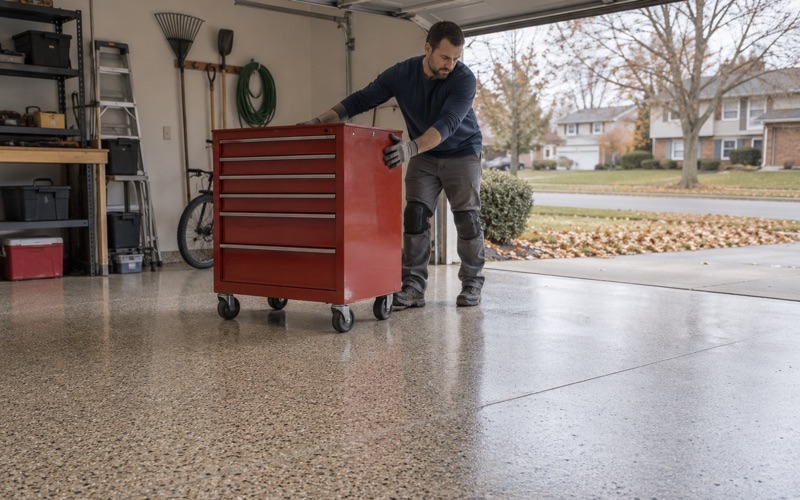
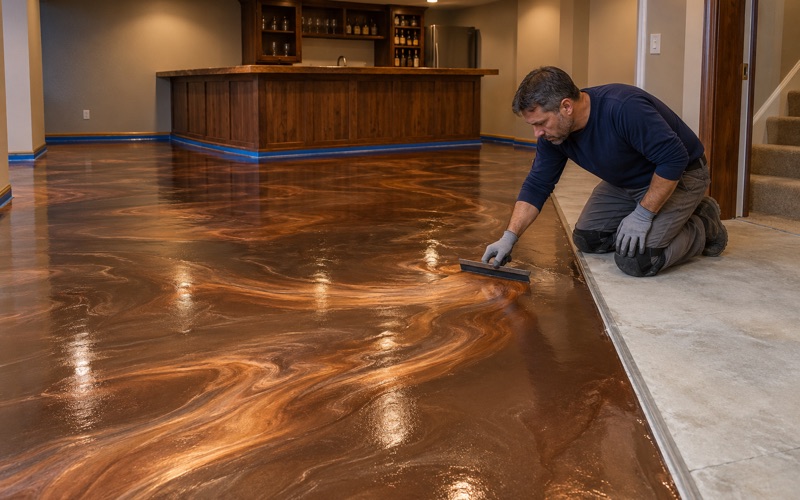
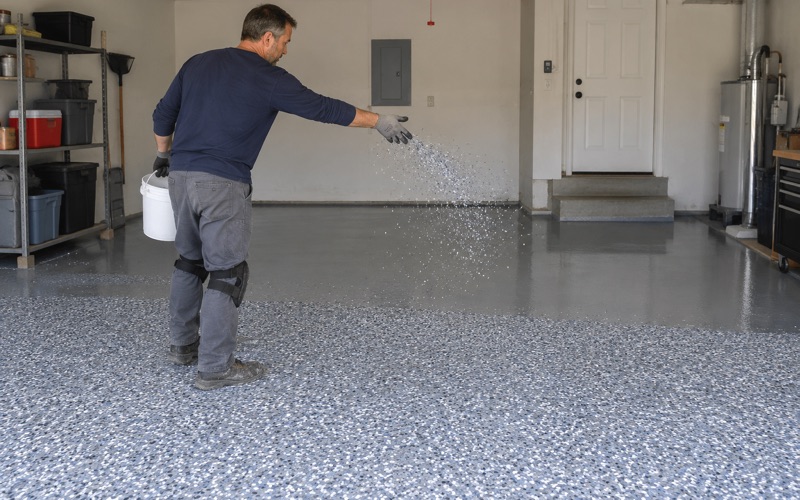
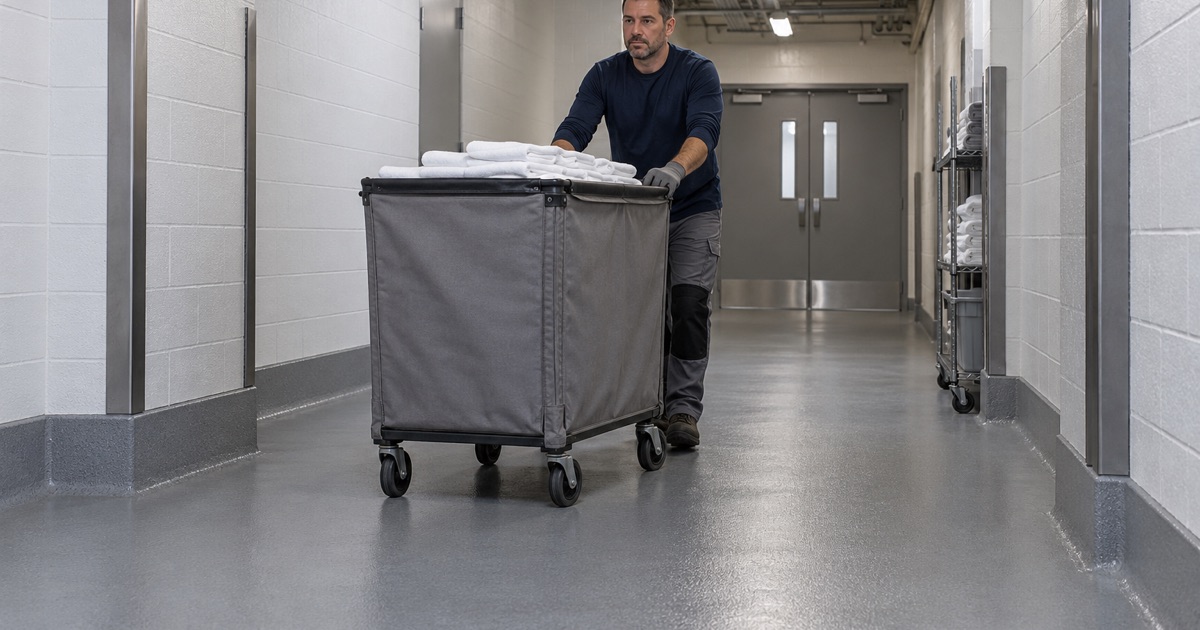
A decorative system with a quartz aggregate or vinyl flake broadcast under a polyaspartic topcoat suits service corridors, stair landings and utility rooms where looks matter but traffic never stops. The topcoat cures quickly, which helps when a hotel can give us only one wing or one overnight window at a time.
Speed has a cost, though. A fast-curing coat leaves less working time, so we size crews and batch sizes to the room rather than rushing a large pour, and we check for amine blush on epoxy layers before the next coat goes on.
Fitness club locker rooms and wet floors
A fitness club of that size brings locker rooms, showers, heavy equipment and cleaning that never really stops. Wet floors need texture in the final coat so a bare foot does not slide, and cove details where the floor meets the wall so water cannot sit in the joint.
Under weight rooms and equipment rows we look at urethane cement or a thicker 100% solids epoxy build rather than a thin decorative coat. The proposal names the product, the system build and the finished thickness, so a club’s facilities staff can check what went down against what was quoted.
Office cores, kitchens and loading doors
Corporate offices bring break rooms, mail rooms, mechanical rooms and loading docks, and those are the floors that wear first. Pallet jacks and forklift tires grind through a thin coating at the dock edge, so we specify a heavier build there and taper to a lighter system inside.
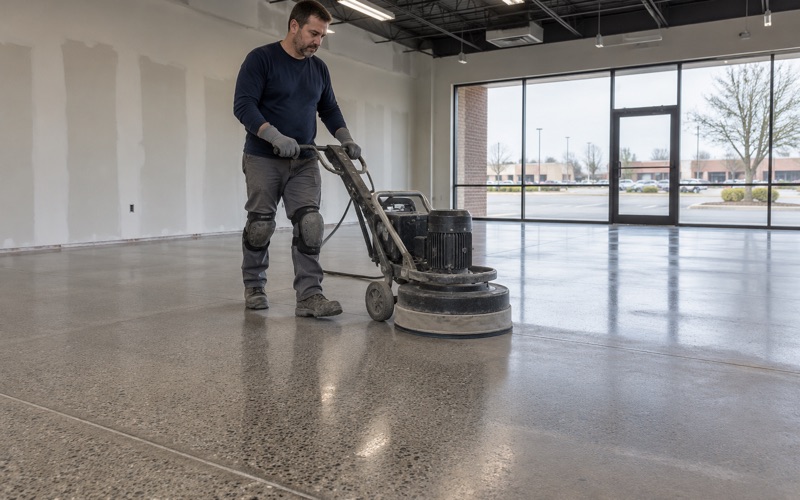
Where an office floor holds servers or sensitive electronics, a static-dissipative or ESD system is specified to a resistance range rather than chosen by color. Polished concrete with a lithium silicate densifier is another option for a large open floor that needs durability more than a coating.
Every one of these jobs is scheduled around the hours the building has to stay open. That often means nights, weekends or a phased sequence that keeps one entrance usable while another is coated.
Fire District Review for Work Beyond a Single-Family House
The building authority for Warrenville is the City of Warrenville Community Development Department, but commercial work has a second reviewer. The Warrenville Fire Protection District is responsible for reviewing and approving all non-single-family building and occupancy permits, along with fire alarm and sprinkler drawings.
What the fire district looks at
The district’s plan review covers attached dwelling units and institutional, commercial and industrial buildings. It asks for no fewer than three copies of plans and examines them within seven business days, so a project that needs review should build that time into the schedule rather than discover it at the door.
In commercial space a floor coating is often one piece of a larger project. When the coating is part of a tenant build-out, a change of occupancy or a renovation that touches sprinklers or alarms, the owner or general contractor handles that permit, and we work to the schedule the review sets.
What the city permit page says
The city’s permit page lists flooring among the kinds of work that generally do not need a building permit, alongside painting, tiling and non-structural interior repairs. For a detached house that usually makes a garage coating a scheduling question rather than a permit one, but we confirm the current rule with Community Development, (630) 393-9050, before relying on it.
That exemption does not carry over to commercial or multi-family work, which still passes through the fire district. Townhome and condominium owners have another layer as well: an association may set its own rules on contractor access, hours and shared driveways, so we schedule around those and around the neighbors who still need their garages.
Food-service floors
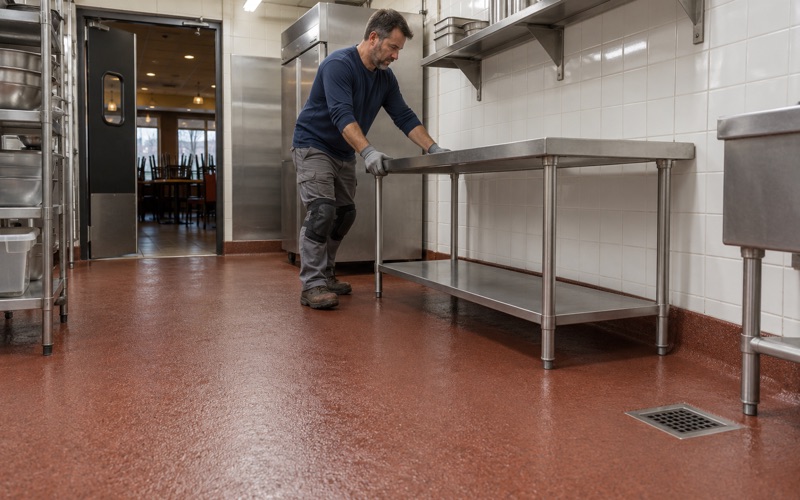
Hotel kitchens, restaurant prep rooms and any food-service floor fall under the DuPage County Health Department. Illinois adopted the 2022 FDA Food Code, which calls for smooth, durable, easily cleanable floors and coved junctures where the floor meets the wall, so we build the cove into the coating system rather than leaving a caulked seam.
Texture matters there too. A kitchen floor needs enough grip for wet, greasy shoes without becoming so rough that it cannot be cleaned, and we set the broadcast and topcoat to strike that balance.
How We Prepare and Test a Warrenville Slab
Whether the floor is a hotel corridor or a garage in a detached house, preparation decides how long the coating lasts. Our process is the same at every scale; only the equipment and the schedule change.
Mechanical profile, never acid
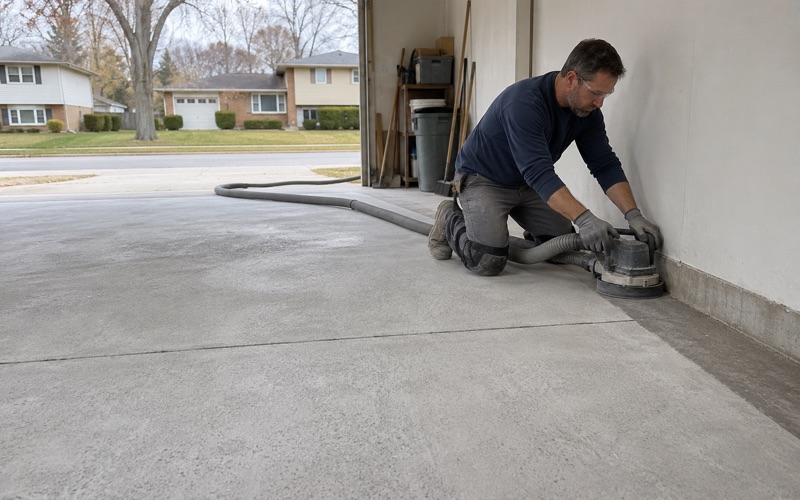
We open every slab with a diamond grinder or a shot blaster to a measured ICRI CSP profile before any primer goes down. We do not acid etch, because acid leaves residue and an uneven profile that the coating cannot be trusted to grip.
Grinding also tells us what the old floor was hiding. A peeling sealer, a previous epoxy or a patch that never bonded shows itself under the diamonds, and we price the removal honestly instead of coating over it.
Moisture testing as a line item
Moisture is a leading reason a coating blisters, so testing is written into the scope rather than offered after a failure. We use ASTM F2170 in-situ relative humidity probes or ASTM F1869 calcium chloride tests, depending on the slab, and compare the readings to the coating manufacturer’s limit.
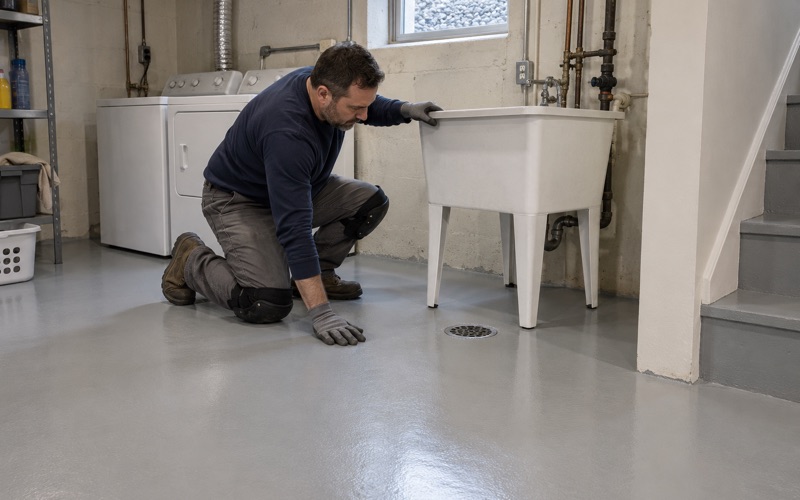
Garage slabs deserve the test as much as basements do. The model residential code exempts garages from the under-slab vapor retarder requirement, so a newer garage floor is not automatically a dry one, and where readings run high we specify a moisture-mitigation primer before the build coats.
What goes in writing
Warranty exclusions are read out before the job is sold, with moisture at the top of the list, so nobody learns about them after a blister appears. Curing is scheduled against slab temperature and the dew point spread at the surface rather than a date on the calendar.
Illinois issues no state license for flooring or coatings work, so instead of a license number we show the registration, bond and insurance a municipality asks for. Every home job also gets a written contract and the state’s Home Repair: Know Your Consumer Rights pamphlet before work starts, as the Illinois Home Repair and Remodeling Act requires.
Coatings are chosen within the Illinois limit on VOC content, which binds the installer as well as the manufacturer, and that matters in occupied hotels and offices where people keep working nearby. When a space has to wait for better curing conditions, or a schedule cannot fit the cure time a system needs, we say so before the contract is signed.
When you call about a Warrenville floor, we start with a site visit, look at the slab and the old finish, and then write the scope. The quote follows the inspection, never the other way around.
- 20+ Years Coating Concrete
- Moisture Tested Before We Coat
- Free Written Estimates