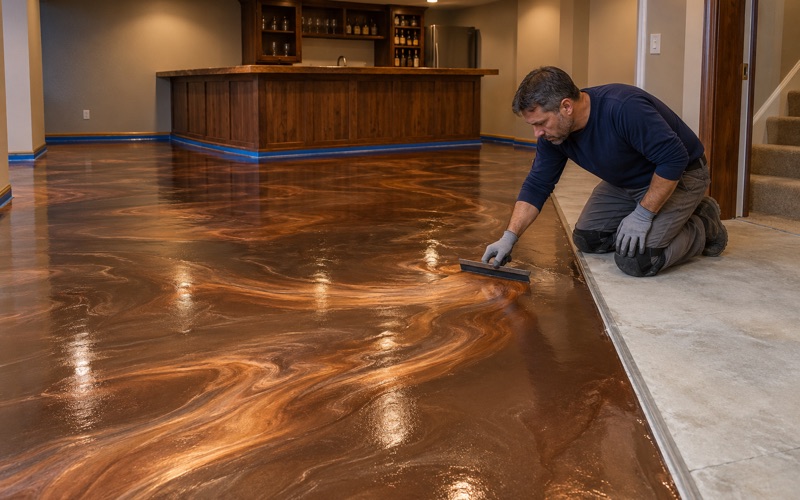
Palatine Epoxy Floors brings more than 20 years of epoxy-flooring work to Schiller Park, and the floors we plan for here are not only garages and shop bays. Public buildings make up a real share of the slabs in a small village, and each one carries a schedule and a set of loads that a homeowner’s garage never sees. We start every job the same way, with the concrete itself.
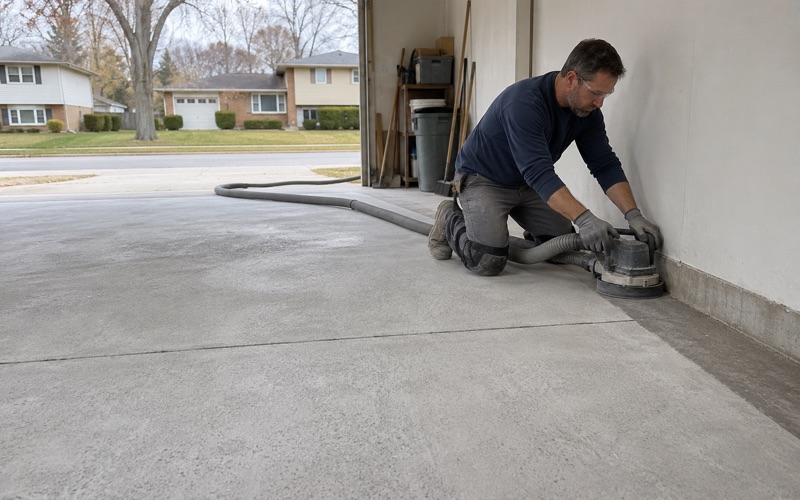
That means a moisture test written into the scope, a mechanical grind or shot blast instead of acid, and a proposal that names the product, the system and the finished thickness. If the slab needs crack repair or an old coating removed first, we say so before the price, not after. A coating follows the concrete under it, so we never sell one as a cure for a moving slab.
What follows walks through the public floors that set this village apart, what changes about the work on them, and the paperwork that comes before any grinder starts.
A School District and a Village Government on the Employer List
The village’s 2024 table of principal employers, drawn from its own business-license records, lists School District 81 with 199 employees and the Village of Schiller Park with 126. Two of the ten names on that list are the community’s own school district and its own government. For a village of about 11,709 people on 2.77 square miles, that is a meaningful slice of the local workforce and of the buildings that need floors kept up.
The village also runs its own services rather than contracting them out. Its organization chart shows the Schiller Park Fire Department, with a Fire Chief, Battalion Chiefs and Lieutenants, alongside a Community Development Department that oversees building. A village that houses fire apparatus, public works equipment and classrooms has a floor inventory that looks very different from a bedroom suburb’s.
Why public floors are their own category
Public buildings tend to share three traits that shape a coating plan. They run on fixed calendars, they carry heavy or repetitive traffic, and they are maintained by staff who need to know exactly what was installed so they can clean and repair it later. That last trait is why our proposal names the product and the film thickness in writing.
Those records outlast the people who signed them. A facility manager who inherits a floor years from now should be able to pull the proposal, see which primer, body coat and topcoat went down and at what thickness, and order a matching recoat instead of guessing.
What we bring to that kind of floor
We do not claim to have worked on any District 81 building, fire station or village facility. What we offer any facility manager here is the process we use everywhere: an honest read of the slab, a measured moisture result, and a written build that can be checked against what went down.
Looking for epoxy-flooring closer to Franklin Park? See Epoxy-Flooring Services in Franklin Park.
Apparatus Bays and Public Works Garages
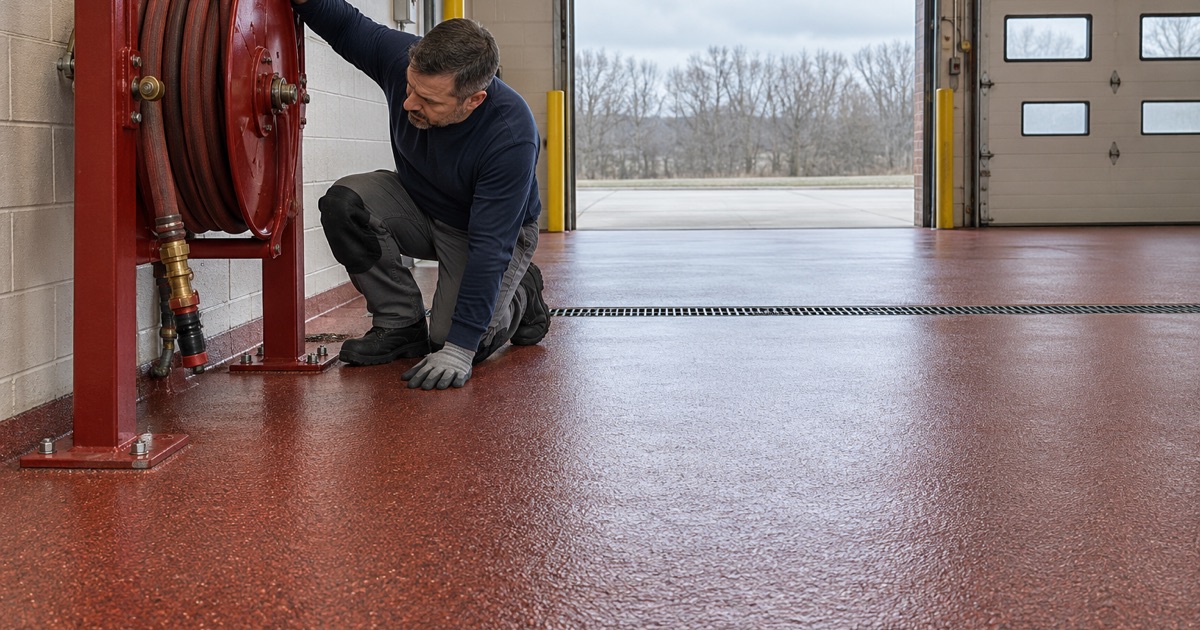
A fire station apparatus bay is one of the hardest floors a coating can face. Engines and ambulances park on it for hours, then pull out under load on tires that may still be hot from a run. Crews wash rigs inside the bay, so the floor sees standing water, detergents and drips from pumps and engines every day.
Building a floor for heavy apparatus
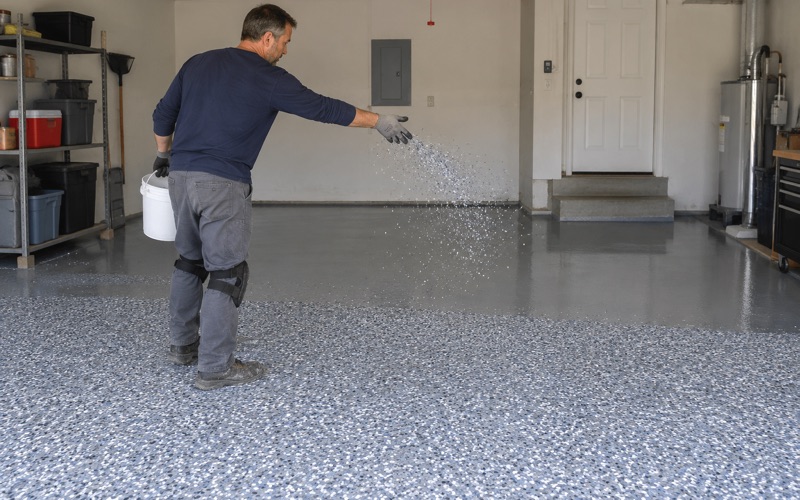
For a bay like that we look first at the slab profile and the joints. A diamond grind or shot blast to the right ICRI CSP range gives a 100% solids epoxy something to grip, and a quartz aggregate broadcast builds texture so a wet floor stays walkable. Polyaspartic or polyurea topcoats resist hot tire pickup far better than a thin roll-on product, which is why a hardware-store kit tends to lift under heavy tires.
Where a bay drains toward trench drains or floor drains, the detailing around those openings matters as much as the open floor. Coating that stops short of a drain lip, or feathers out too thin, is where peeling usually begins. We build up those edges so water leaves the floor instead of working under the film.
Testing before a bay is coated
Even a bay slab that looks dry gets tested. An ASTM D4263 plastic sheet test can flag a problem quickly, but we rely on measured numbers before committing to a system, because a bay that blisters has to come out of service a second time. Amine blush is another risk on a cool, humid bay floor, so we check for it between coats and clean it off before the next layer goes down.
Shop floors and vehicle storage
Public works garages share some of the same demands with a different mix. Plow trucks, loaders and service vehicles come in wet and dripping, and the shop side sees dropped tools, jack stands and solvents. A urethane cement system is often the better choice where a floor takes thermal shock from hot-water washdowns, and we will say so when it fits better than epoxy.
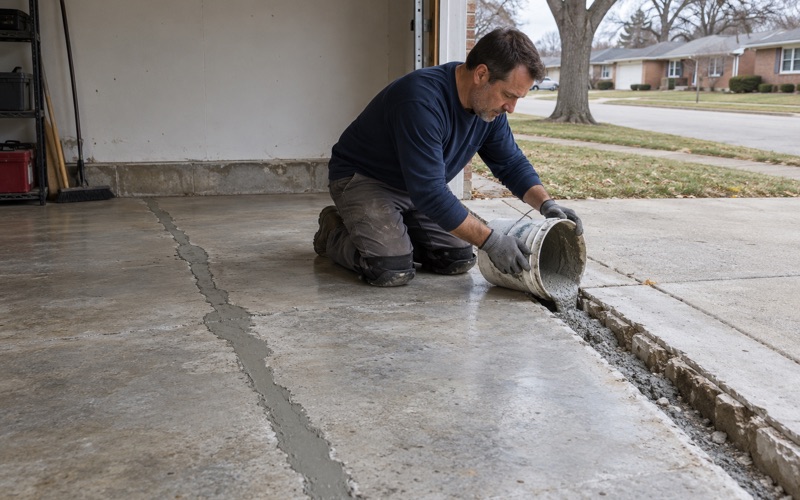
Joints and cracks in an older public garage slab are read before we quote. A coating can hide a hairline crack, but it follows any movement underneath, and we tell a facility manager that plainly rather than promise the film will hold a moving joint together.
Keeping a station in service
A fire department cannot close its bays for a week. We plan staged work, coating one bay or one half of a garage at a time, so apparatus has somewhere to sit and crews keep their response routes open. Fast-cure polyaspartic topcoats help shorten the window when the schedule is tight.
School Floors Done Between Terms
School District 81 buildings follow the academic calendar, and that calendar sets the window for any floor work. Hallways, cafeterias, kitchens, locker areas and custodial rooms each call for a different system, but nearly all of them need to be finished while students are away.
Planning around the school year
Summer break offers the longest stretch, which suits full removal of an old coating, grinding, moisture testing and a multi-coat build. Shorter breaks suit smaller areas, such as a single storage room or a boiler room. We schedule curing against slab temperature and the dew point at the surface, because an empty building with the air handling turned down can surprise a crew that only watches the calendar.
Hallways and classrooms take grit tracked in from outside and rolling carts all day. A high-build epoxy under a polyaspartic topcoat, or a ground slab densified with lithium silicate, can each make sense depending on the traffic and the budget, and we lay out both rather than defaulting to one.
Moisture in older school slabs
An older slab on grade may have no modern vapor retarder under it, and a coating that traps rising moisture can blister. We test before quoting, using ASTM F2170 in-situ relative humidity probes or ASTM F1869 calcium chloride testing against the coating maker’s limits. When readings run high, a moisture-mitigation primer goes into the build from the start rather than being sold later as a repair.
Kitchen and Food-Service Floor Coatings
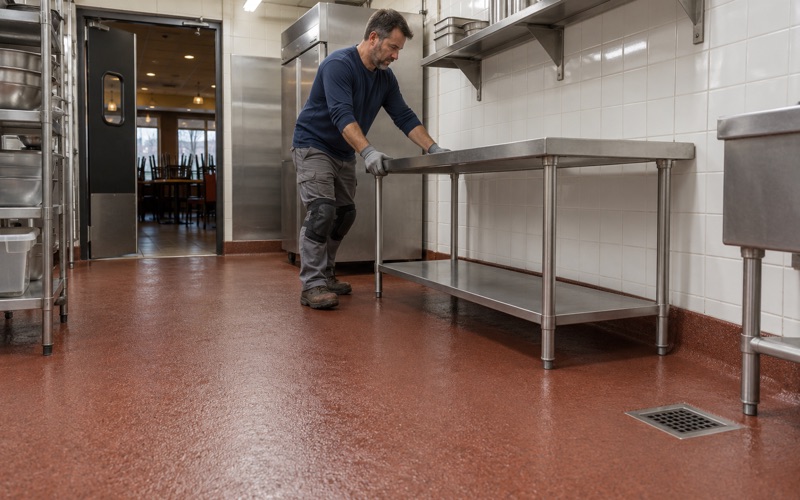
A school kitchen floor answers to the Cook County Department of Public Health, which covers suburban Cook County outside Chicago, Oak Park, Stickney Township, Evanston and Skokie. The Illinois Food Code adopts the 2022 FDA Food Code, which expects smooth, durable, easily cleaned floors and coved floor and wall junctures in food areas. A coved urethane cement or epoxy system can meet that, with enough texture to stay safe underfoot when it is wet.
We have not reviewed any bidding or procurement rule for this page. How a district selects a contractor is its own decision; our part is a clear scope that anyone can check.
Licensed With the Village Before Construction Starts
In Schiller Park we check with the village before a floor job begins, whether the building is public or private. The Community Development Department, with a Building Official, a Permit Coordinator and Inspectors, oversees construction here. Contractors register through the Community Core app with the job’s cost and scope of work and pay a fee by service type.
What the registration asks for
The village asks for a state license where one applies, a certificate of insurance, a surety bond and workers’ compensation as applicable. Illinois issues no state license for flooring or coatings work, so we present the village registration, bond and insurance instead of a license number. Licenses run May 1 to April 30 and renew each year, so a job that crosses that date needs a current registration.
Homes and multi-unit buildings
The same village rules cover residential work. Schiller Park’s housing is almost entirely existing stock: of 4,514 units, none were built in 2010 or later, and most date from the 1950s and 1960s. Garage and basement floors here are recoats and repairs on slabs that have already lived a long time, often under old coatings that must come off completely.
Every home job gets a written contract and the Home Repair: Know Your Consumer Rights pamphlet before work starts, as the Illinois Home Repair and Remodeling Act requires. Warranty exclusions are read aloud before signing, moisture first. In condominium and townhome buildings, we schedule around association rules and the neighbors’ access to their own garages.
Working inside village hours
Grinding and shot blasting are loud. We schedule that work inside the hours the village allows for construction noise, and for a commercial building we plan around the hours it has to stay open. We confirm those hours with the village when we register rather than assuming another town’s rules carry over. Coatings are chosen within the Illinois limits on VOC content, which bind the installer as well as the manufacturer.
- 20+ Years Coating Concrete
- Moisture Tested Before We Coat
- Free Written Estimates