Palatine Epoxy Floors brings more than 20 years of work to epoxy-flooring in La Grange, and the first question we ask about a floor here has nothing to do with flake color. It is which government stands behind the address on the work order. A La Grange mailing address and a job inside the Village of La Grange are not always the same thing, and the gap between them decides who signs the permit.
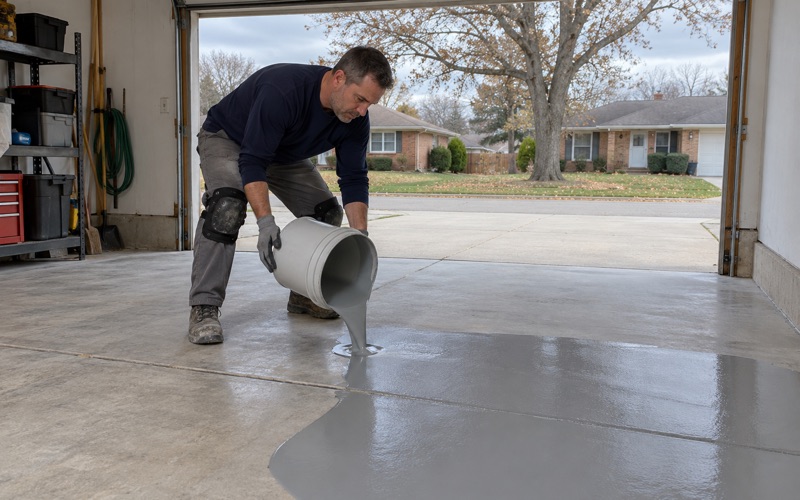
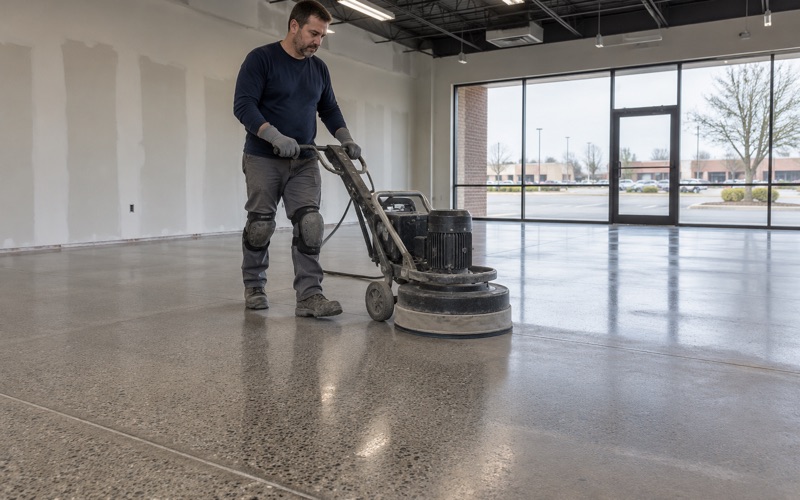
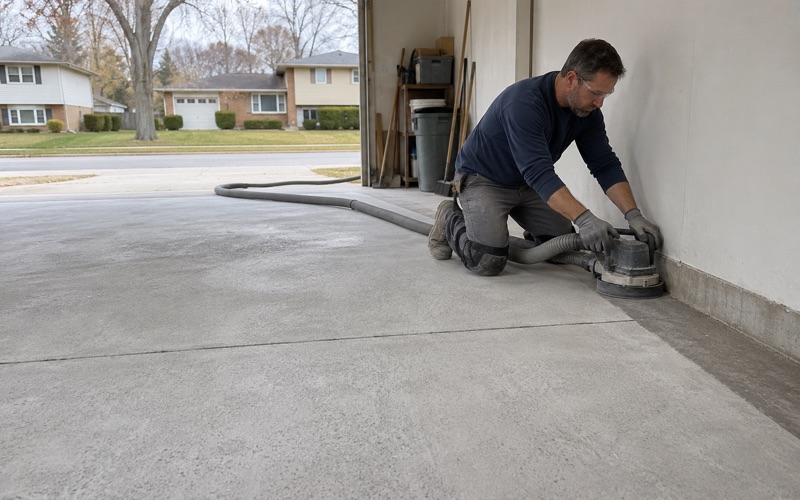
So we settle that before we settle the system. Once the parcel is placed, the floor itself gets the same treatment it would anywhere we work: the slab is opened with a diamond grinder or shot blaster rather than acid, moisture is tested and written into the scope as its own line, and the proposal names the product, the build and the finished thickness so the result can be checked against the quote.
That order matters here, because the ZIP code that carries the La Grange name reaches past the village line. The sections below walk through where it reaches and how we check a property before a date goes on the calendar.
One ZIP code, several governments
What 60525 actually covers
The USPS treats La Grange as the preferred city name for ZIP code 60525, which is why so many addresses that print as La Grange, IL 60525 look interchangeable on a lead form. They are not. A ZIP code is a delivery route drawn for mail carriers, and nothing requires it to follow the boundary of the village that shares its name.
For a floor contractor that difference is practical, not academic. The permit, any inspection, the registration the municipality asks of us and the construction hours we work inside all come from whoever governs the parcel, and the envelope does not tell us who that is.
La Grange Highlands: a La Grange address with no village hall
The clearest case sits just south of the village. La Grange Highlands is an unincorporated community in Lyons Township, Cook County. It uses ZIP code 60525, and the Postal Service accepts La Grange Highlands as an alternative city name while still preferring La Grange.
Unincorporated means there is no Village of La Grange Highlands to file with. A homeowner there can write La Grange on every form they fill out, yet the Village of La Grange has no say over their garage floor, because the house is outside its limits. Government on that parcel runs through Lyons Township and Cook County instead.
We do not quote the permit rules for unincorporated Cook County from memory, and we do not guess at them. What we can promise a Highlands customer is that we find out which office governs the job before we schedule it, and that the answer goes into the proposal in writing.
For the floor itself, a Highlands garage gets the same scope as one inside the village: mechanical prep, a moisture test and a named system. What differs is the paperwork trail and the office that answers for it, and a customer deserves to know which office that is before signing.
Looking for epoxy-flooring closer to Barrington? See Epoxy-Flooring in Barrington.
The plant with a La Grange address in McCook
The second case is a commercial one, and it shows how far a mailing address can drift from a municipal boundary. Electro-Motive Diesel’s mailing address is 9301 W 55th Street, La Grange, IL 60525. Run that address through the US Census Geocoder and it lands in the village of McCook, in Lyons Township, Cook County, not in La Grange.
We mention the plant only because it is the plainest example in the ZIP code, not because we have worked there. The lesson carries to any industrial building, warehouse or shop that asks for a quote under a 60525 address: the name on the letterhead is a postal convenience, and the municipality has to be confirmed separately.
Between the Highlands and the plant, the La Grange name already covers property outside the village twice over, and we make no claim that those are the only cases. Each new address is treated as its own question and answered from the parcel.
What changes on a commercial floor
Commercial work already carries more variables than a home garage. Industrial and warehouse slabs take forklift wheels, dropped parts and chemical spills, so a commercial build is usually a thicker 100% solids epoxy with a quartz aggregate broadcast for traction, or a urethane cement where heat, thermal shock and washdown are part of the working day.
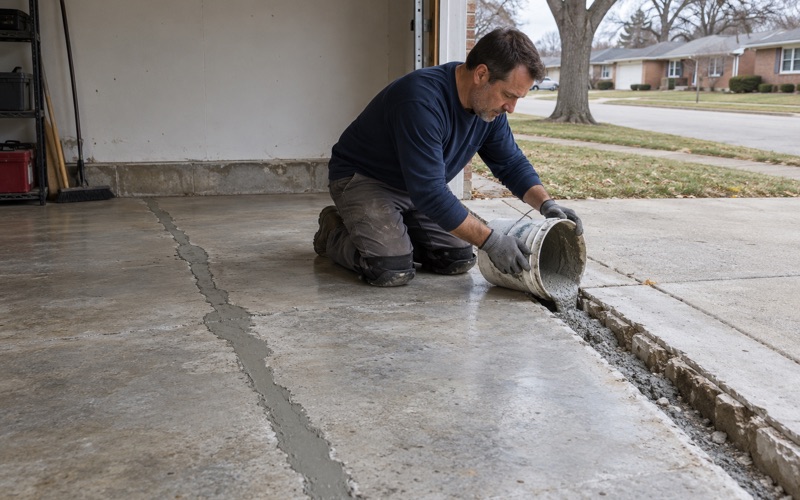
Surface preparation is heavier too. We grind or shot blast to the ICRI CSP profile the chosen system calls for, and we read the cracks, joints and any old coating before pricing, saying plainly when the slab needs repair before anything can bond to it.
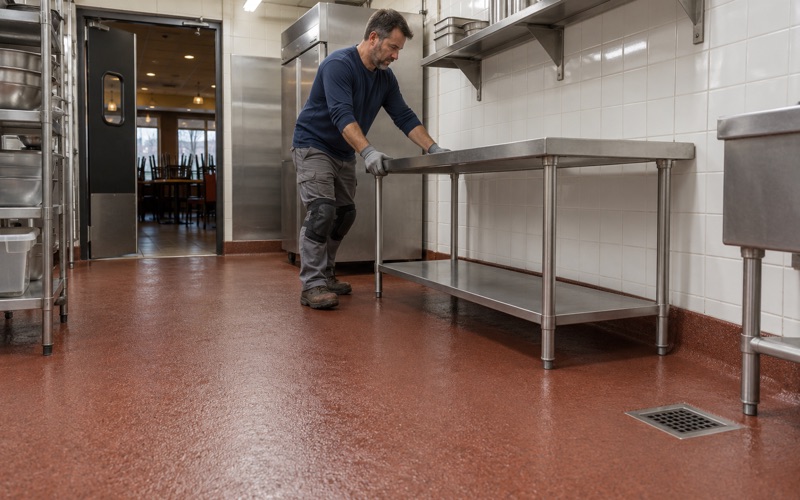
A food-service tenant adds another layer. Kitchens and prep rooms answer to the Illinois Food Code, which adopts the 2022 FDA Food Code, and for a property in La Grange, La Grange Highlands or McCook the local health department is the Cook County Department of Public Health. We build coved floor-to-wall junctures for those rooms, as FDA Food Code 6-201.13 describes.
None of that changes which office governs the building, though, and that is why the municipal check comes first. A business that has to stay open gets a schedule built around its hours, and that schedule still has to fit the construction hours its own municipality allows.
Checking the parcel before quoting the permit
Our process for any 60525 address starts at the parcel, not the ZIP. Before a crew is scheduled, we confirm the municipality the property sits in, and if the answer is no municipality at all, we note that the job falls to Lyons Township and Cook County. It takes a few minutes at the start and saves a rescheduled install at the end.
What we look up
We check the property against municipal boundaries rather than the mailing label. The result tells us whose building permit process applies, whose paperwork we file, and whose construction-noise hours set the start and stop times on the work order.
If the lookup is ambiguous, for instance a parcel near a boundary or a commercial address with several buildings, we ask the customer for the tax bill or the property’s municipal listing and confirm from that. A quote that says La Grange when the property sits elsewhere is a quote we would have to redo.
Illinois issues no state license for flooring or coatings work, so there is no license number for us to print on a proposal. What we show instead is the registration, bond and insurance the governing municipality asks for, which is one more reason the municipality has to be right before the paperwork starts.
What goes in writing for a home job
On any home job, wherever it sits, we hand over a written contract and the Home Repair: Know Your Consumer Rights pamphlet before work begins, as the Illinois Home Repair and Remodeling Act requires. The scope beside it records which village, or which township and county, governs the property.
We also read the warranty exclusions aloud before the sale, moisture first. A coating is a film that follows the slab beneath it, so if a slab is moving or wet, we say that before the job rather than after the first blister.
Inside the village: Lyons Township and the Village of La Grange
When the parcel does fall inside the limits, the picture simplifies. The Village of La Grange, incorporated in 1879 and part of Lyons Township in Cook County, issues its own building permits, and that is the office we check with for a floor job inside the village.
Who the buyer usually is
Most homes in the village are owned by the people living in them: 4,740 of 5,816 occupied units, or 81.5 percent, are owner-occupied, and only 121 detached houses are rented. In practice that means the person who signs for a basement or garage floor is usually the household that will walk on it every day.
That shapes how we talk through a job. An owner who plans to stay can hold us to the finished thickness and the warranty terms, because the proposal is written so those details can be checked after the floor goes down.
Testing the slab before the coating
Much of the housing stock is older: 64.0 percent of the village’s units predate 1960, which puts their slabs decades before ASTM E1745, the standard that defines a modern under-slab vapor retarder. We do not assume those floors are dry. Newer garages get the same treatment, since the model code’s IRC R506.2.3 exception lets a garage slab go down with no vapor retarder at all.
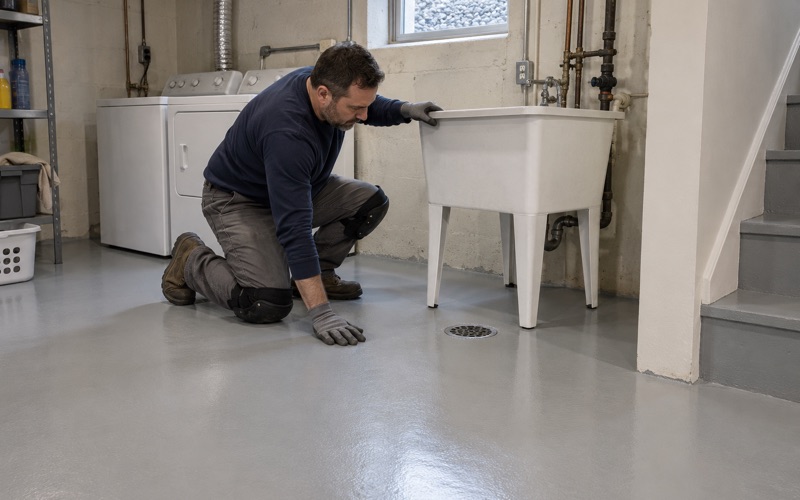
The test itself is priced up front, not sold after a failure. Depending on the slab, that means an ASTM D4263 plastic sheet test as a first read, ASTM F1869 calcium chloride emission testing, or ASTM F2170 in-situ relative humidity probes, measured against the thresholds the chosen product allows. A high reading points us to a moisture-mitigation primer or a repair conversation before any color is chosen.
Picking the system for a village garage
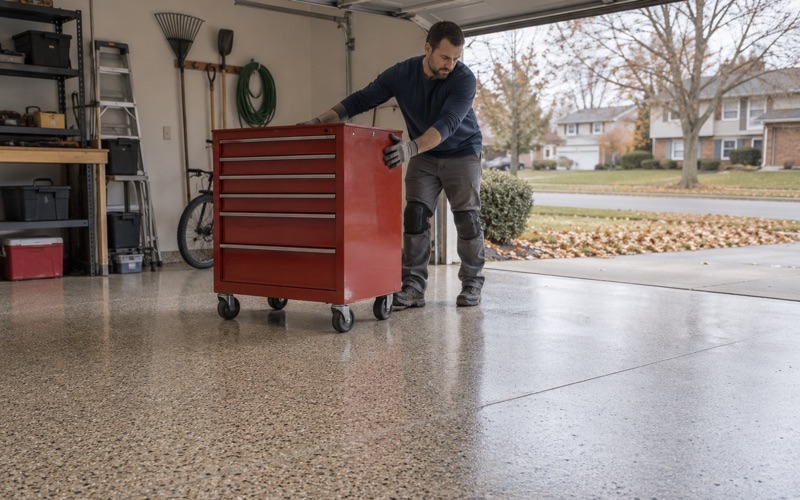
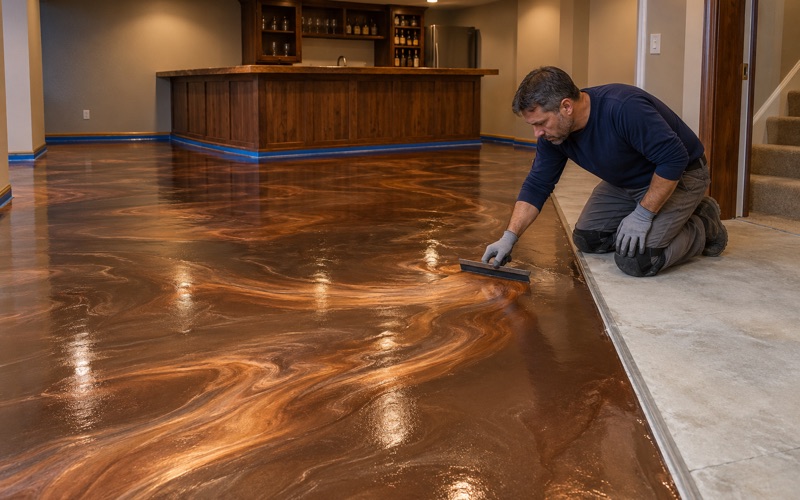
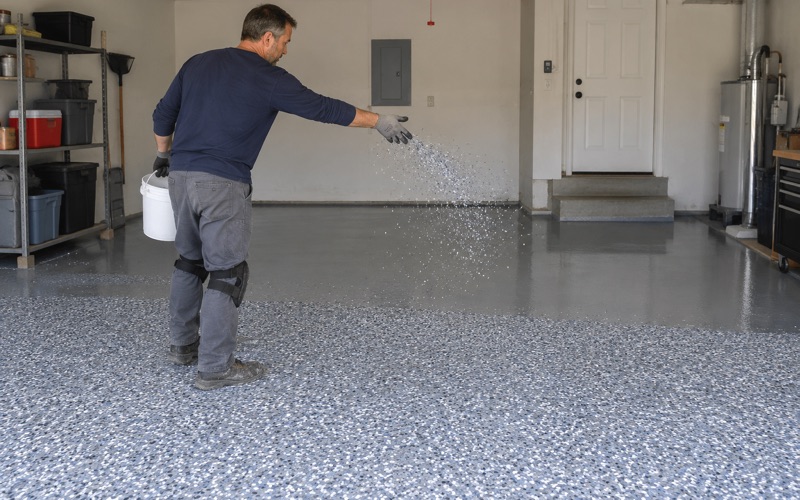
For an attached or detached garage, the usual build is a 100% solids epoxy base with a full vinyl flake broadcast, locked in with a polyaspartic topcoat that resists hot tire pickup. A basement that stays cool and dry may get a thinner build or a lithium silicate densifier on bare concrete, depending on how the room is used. Either way, the coatings we pick stay within the Illinois VOC limits in 35 Ill. Adm. Code Part 223, which bind the installer as well as the manufacturer.
The floor work inside the village follows the same discipline as anywhere else. The only step La Grange adds is the one this page started with: confirming that the address really is in La Grange before anyone signs.
- 20+ Years Coating Concrete
- Moisture Tested Before We Coat
- Free Written Estimates