Palatine Epoxy Floors has installed epoxy flooring for more than 20 years, and epoxy flooring in Forest Park often starts with a question other jobs skip: who is the floor for, and how long does it have to last before anyone looks at it again? For an owner, the answer is usually years of daily parking. For a landlord, it is the next lease and the one after it.
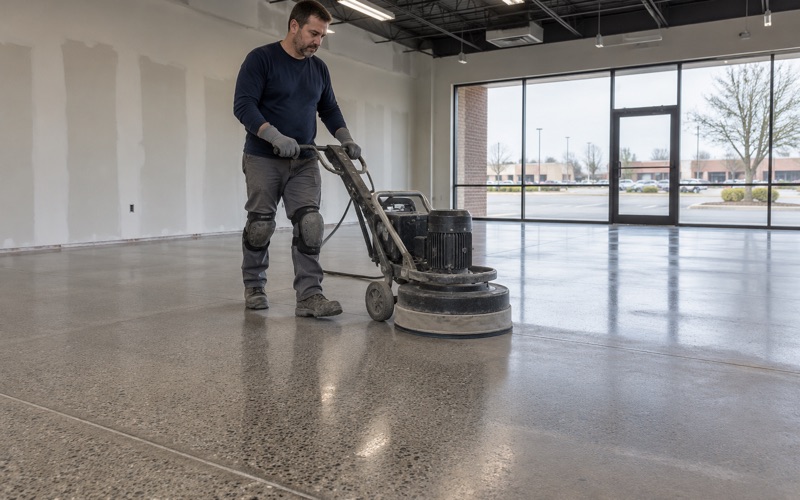
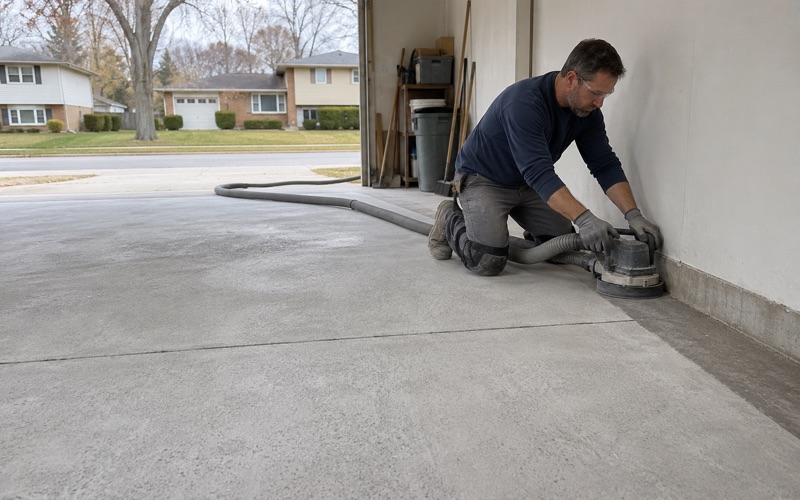
Either way, the work begins the same. We open every slab with a diamond grinder or a shot blaster, never an acid etch, and we test for moisture as a priced line in the scope rather than as an upsell after a blister shows up. The written proposal names the product, the system build and the finished thickness, so a property owner who is not on site for the install can still check what went down against what was quoted.
That last point carries real weight in this village, because a large share of the homes on these blocks are owned by someone who rents them out rather than lives in them.
Almost Half of Forest Park Households Rent
The Census Bureau’s American Community Survey for 2020 through 2024 counts 7,085 occupied housing units in Forest Park. Of those, 3,743 are owner-occupied and 3,342 are rented, which puts renters at 47.2 percent of households. That is close to an even split, and it changes how a floor job gets decided, paid for and scheduled.
When the person who parks on a garage floor is not the person who pays for it, the questions shift. A tenant cares how the floor looks on move-in day. The owner cares whether it still holds up after three or four years of someone else’s cars, storage bins and spilled oil, and whether it can be cleaned quickly before the next showing.
Durability Over Showroom Finish
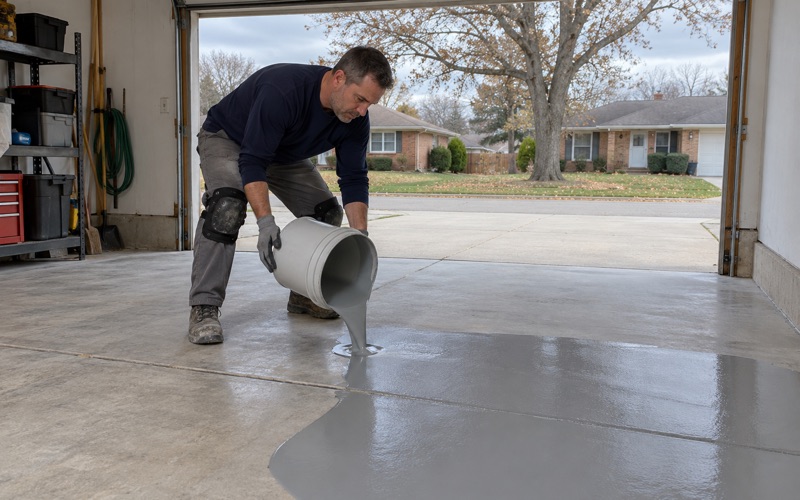
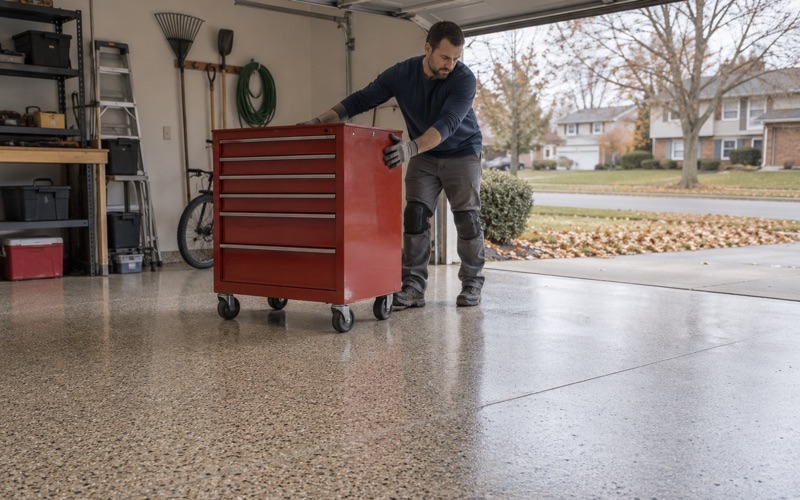
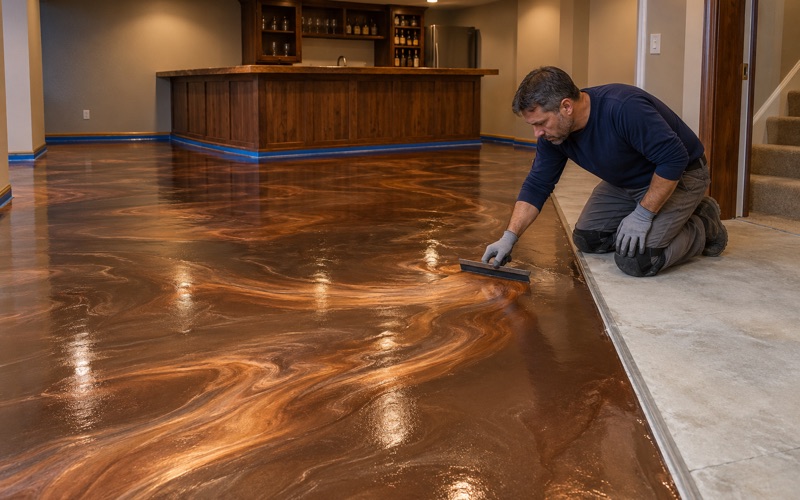
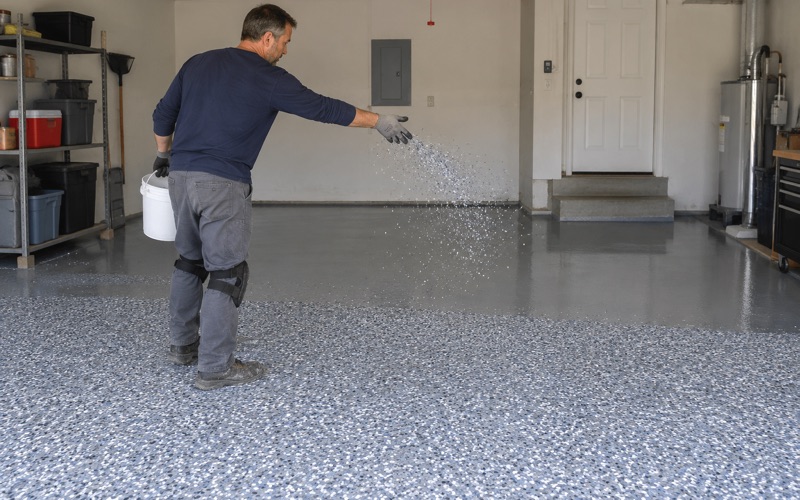
For a rental, we steer the system toward wear rather than gloss. A 100% solids epoxy base with a full vinyl flake broadcast hides grit and tire marks between cleanings, and a polyaspartic topcoat resists the hot tire pickup that lifts weaker coatings where a car parks every night. Where a floor takes heavier abuse, a quartz aggregate broadcast gives a harder, more textured wearing surface.
Garage floors on any lease also have to face the calcium chloride brine and rock salt that tires carry in all winter. We build the topcoat thickness for that, and we name it in the proposal so the owner can compare bids on what is actually going down rather than on a color chip.
Cleaning Between Leases
A coated floor also shortens the turnover itself. Oil drips, salt film and tire marks wipe or mop off a sealed surface instead of soaking into bare concrete, so the make-ready crew spends minutes on the garage rather than an afternoon with a degreaser. A lithium silicate densifier is a lower-cost option for a basement that only needs dust control, though it will not give the stain resistance of a full coating.
Who Signs the Contract
On a home job, the Illinois Home Repair and Remodeling Act calls for a written contract, and we hand over the state’s Home Repair: Know Your Consumer Rights pamphlet before work starts. On a rented house, that contract is with the owner who hires us, and the tenant’s role is limited to access and timing.
Looking for epoxy-flooring closer to Lindenhurst? See Lindenhurst Epoxy-Flooring.
598 Rented Houses and the Landlord’s Garage and Basement
Not all of that renting happens in apartment buildings. Of the 2,107 occupied single-family detached houses in Forest Park, 598 are renter-occupied, according to the same survey. Each one is a house with the floors a homeowner would normally look after, such as a garage slab or a basement, except that the person deciding on them usually lives somewhere else.
Reading a Slab You Do Not See Every Day
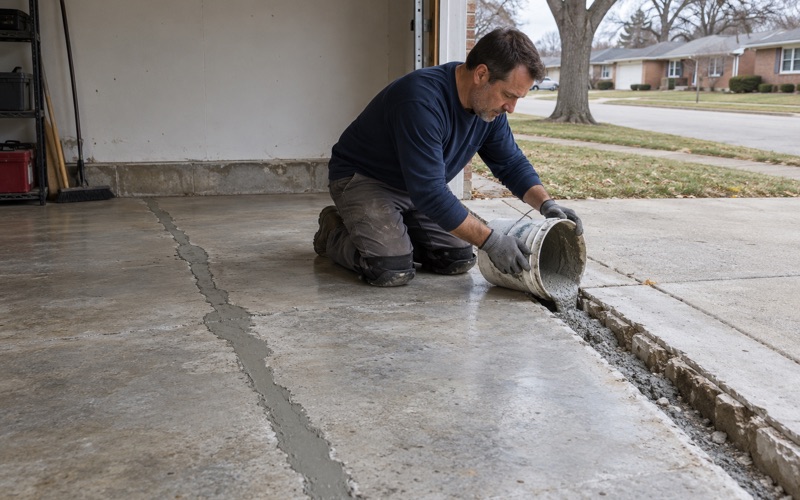
An owner who rents a house out may not have stood in its garage for a year. Before we quote, we walk the slab and read the cracks and any old coating, and we say plainly when the concrete needs repair before it can be coated. A coating is a film that follows the slab under it; it will not stop a crack from moving, and we say that before the job rather than after.
A garage that has seen several tenants may also hold an earlier attempt at a coating. Peeling paint, a failing kit or a previous patch all come off under the grinder, down to the ICRI surface profile the chosen system calls for, so the new coating bonds to concrete rather than to whatever was there before.
Basements in Older Rental Houses
Much of Forest Park’s housing is old: 3,653 of its 7,649 units were built in 1939 or earlier. A basement slab in a house of that age may have no vapor retarder under it at all, which is why we test it rather than guess.
Our moisture work uses ASTM F2170 in-situ relative humidity probes or ASTM F1869 calcium chloride tests, with a quick ASTM D4263 plastic sheet check as a first read. If the numbers run high, a moisture-mitigation primer goes into the scope before the epoxy, and the warranty exclusions are read out to the owner up front, with moisture named first.
We also do not sell a basement coating as radon reduction. In Illinois that work requires a radon mitigation license from IEMA, and a floor contractor offering it as a side benefit is promising something the coating cannot deliver.
Coating Between Tenants, Working to a Move-In Date
Landlord turnover sets a hard edge on the calendar. The last tenant moves out, the unit gets cleaned and painted, and the next lease has a start date that does not move. A floor coating has to fit inside that window, and it has to be fully usable by the day the new tenant pulls in.
Building the Schedule Backward
We plan a turnover job from the move-in date back. Moisture readings come first, because some tests need a day or more in the slab, then grinding and repairs, then the coating build itself. A polyaspartic topcoat can shorten the return-to-service time compared with a slower epoxy topcoat, which is often the difference between a floor that is ready for the lease and one that is still curing when the moving truck arrives.
Temperature and humidity get the same respect. We schedule curing against slab temperature and the dew point spread at the surface, not against the calendar, because a coating laid on a slab too close to its dew point can cloud, blush or lose adhesion. Amine blush on an epoxy coat has to be cleaned off before the next coat goes on, and skipping that step is a common cause of early peeling.
When a Turnover Falls in Winter
An unheated garage in January may not reach a temperature the coating needs to cure properly. When a lease turns over in the cold months, we say plainly that the garage may have to wait for spring, and the owner can decide whether to delay the floor or schedule it for the next vacancy. A heated basement is a different story and can usually be done year-round.
Working Around the People Still Nearby
Not every turnover is an empty building. In a house with a separate rental unit or neighbors on a shared drive, we keep the work inside the hours the village allows for construction noise and plan around the access other residents need to their own garages and doors.
Small Rental Buildings in a Blue Line Commuter Town
Beyond the detached houses, a sizable share of Forest Park’s renters live in small buildings. The survey counts 384 renter households in three-to-four-unit buildings and 326 in buildings of five to nine units. In buildings that size, the shared floors, such as basement storage, a laundry room or the utility room around the boiler, are the owner’s to maintain rather than any single tenant’s.
Utility and Storage Floors
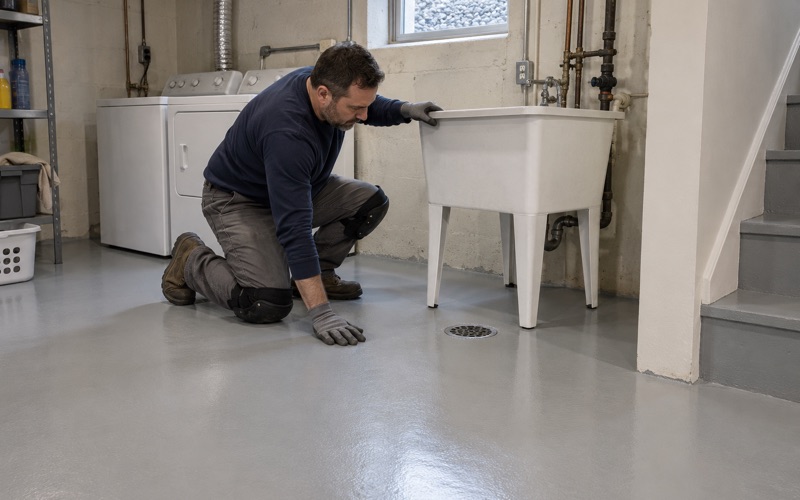
These floors take a different kind of wear than a garage. Laundry rooms see water and detergent, storage rooms see dragged boxes and furniture, and utility rooms see equipment service and the occasional leak. We often recommend a 100% solids epoxy with a light quartz broadcast for traction, or a urethane cement system where the slab sees hot water or heavier moisture, with careful detailing around floor drains and any sump pit.
Inside an occupied building, the coating we pick also has to respect air quality. We select products within the Illinois VOC limits for architectural coatings under 35 Ill. Adm. Code Part 223, a rule that binds the installer as well as the manufacturer, and we plan ventilation so tenants upstairs are not living with solvent odor for days.
Paperwork the Village Asks For
Illinois does not issue a state license for flooring or coating work. Instead of a license number, we show the registration, bond and insurance the Village of Forest Park asks of contractors, and permit questions go to the village Building Department. Having those documents in hand before the first visit saves an owner a follow-up call.
Floors for Commuters at the End of the Line
Forest Park is also the end of the line. The Forest Park terminal is the western terminus of the CTA Blue Line, on the Eisenhower Expressway at Des Plaines Avenue, and it makes the village one of just two municipalities on the Chicago L network that do not directly border Chicago. The terminal sits on the site of the former Forest Park Amusement Park, which operated from 1907 to 1922.
For a landlord, that train line is part of the listing, and it shapes how a rental’s floors get used. One tenant who rides the Blue Line may treat the garage as a workshop or storage room more than a nightly parking spot, while the next parks two cars in it. We build the floor for the harder of those uses, because the owner cannot know which tenant comes next.
Owners who live in their Forest Park homes get the same process: a ground slab, measured moisture, a named system and an honest schedule. The difference on a rental is only who we answer to and the date we are working toward.
- 20+ Years Coating Concrete
- Moisture Tested Before We Coat
- Free Written Estimates