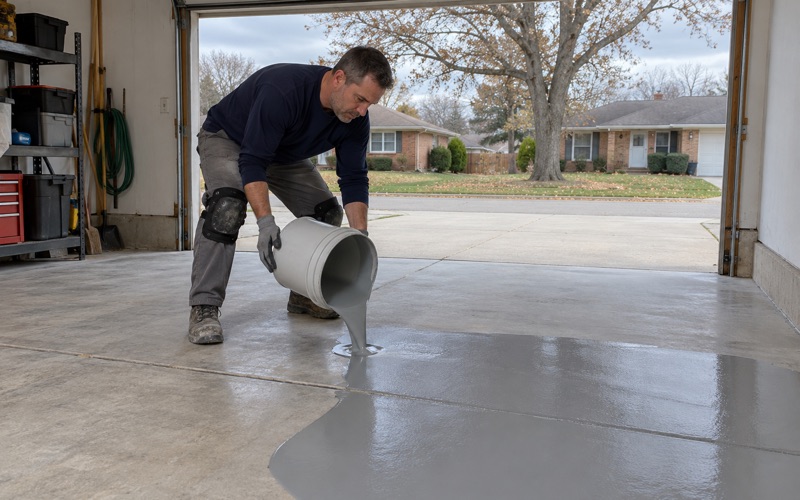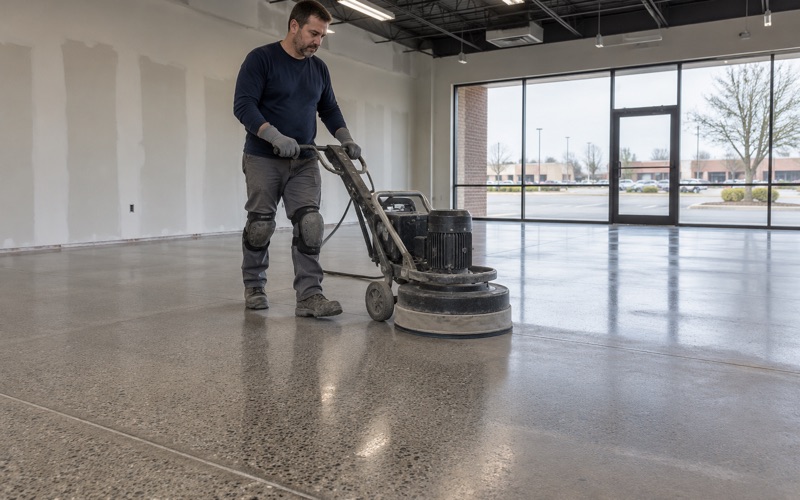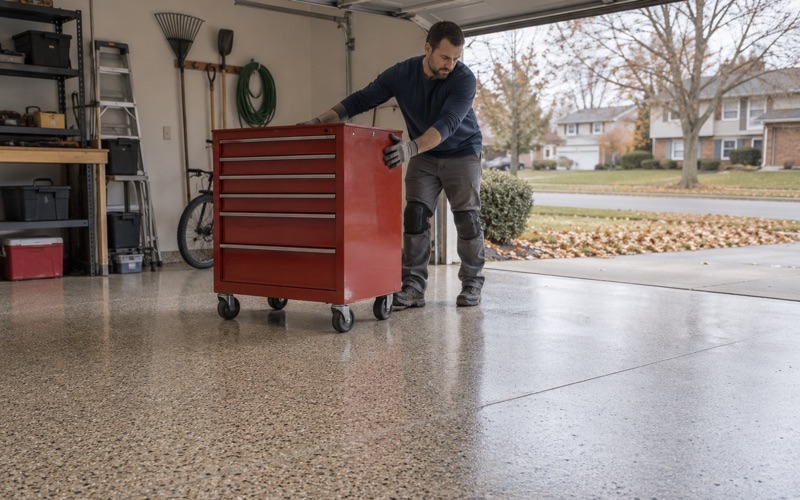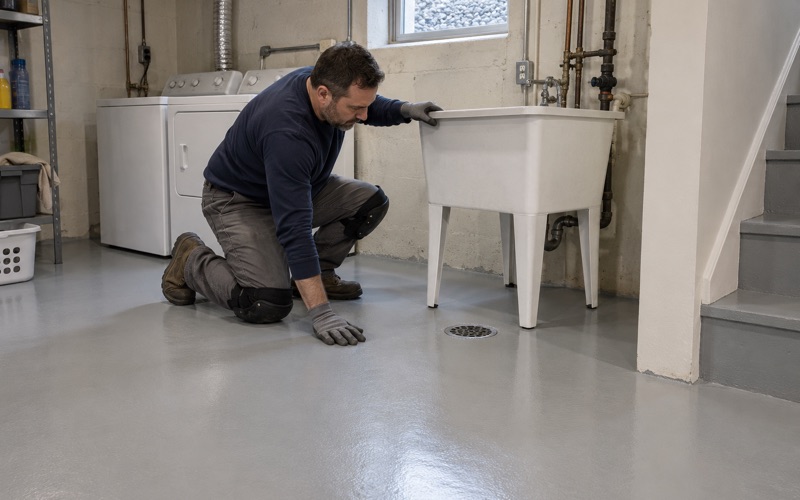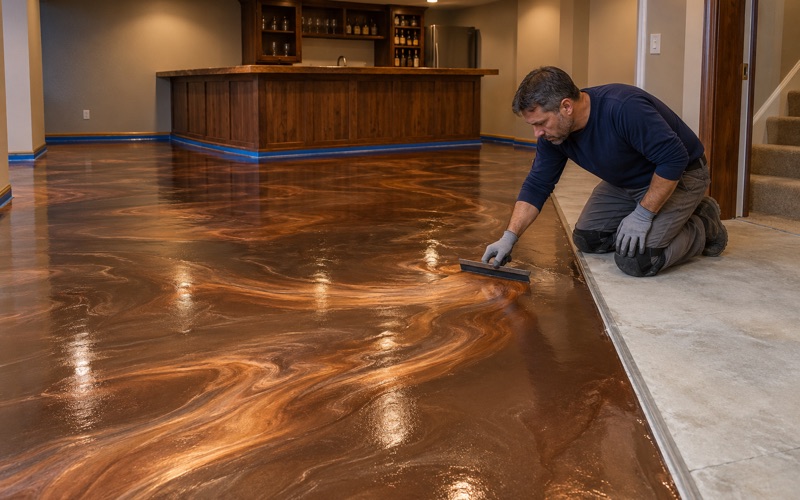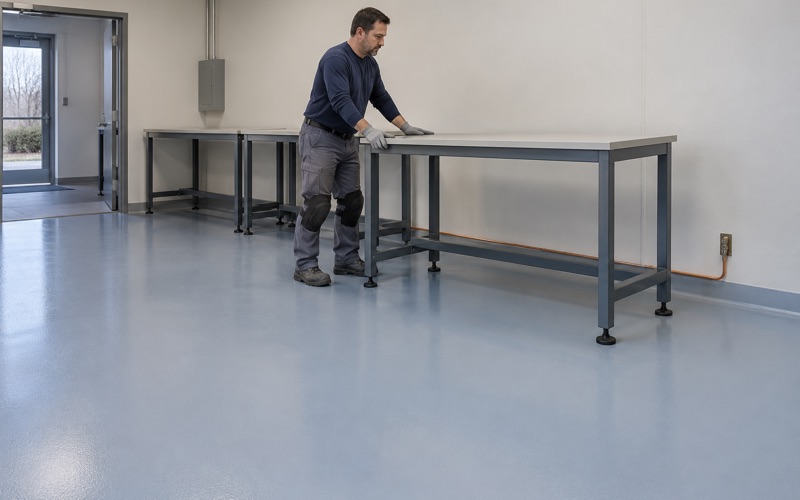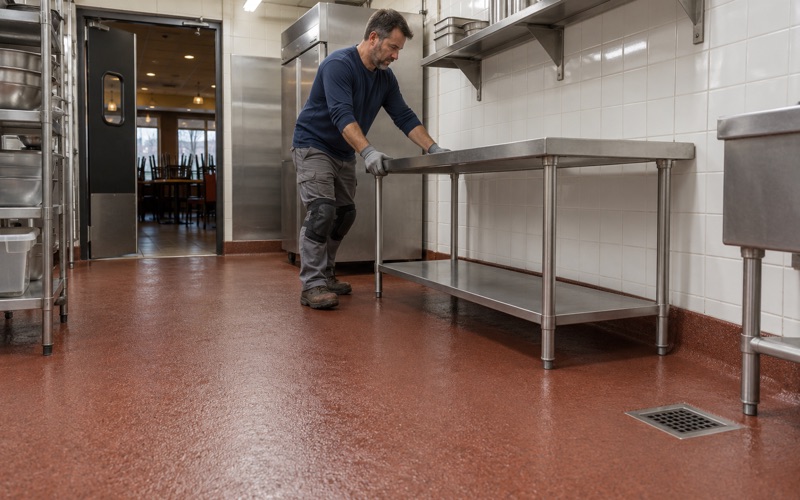
Palatine Epoxy Floors has spent more than 20 years on epoxy flooring in Bellwood and across the western Cook County suburbs, and the jobs that ask the most of us here are floors people walk on slowly. A common room, a corridor or a mail lobby used by older residents needs a finish chosen for grip first and shine second, and that changes the system we specify from the primer up.
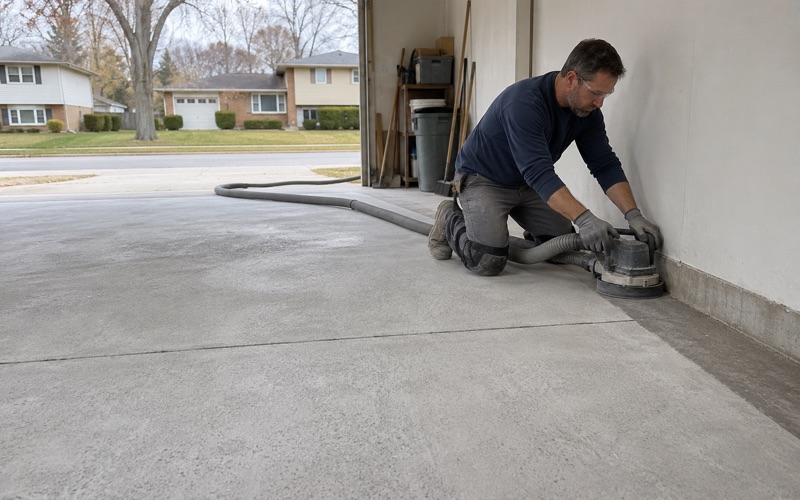
Every slab we coat is opened with a diamond grinder or a shot blaster to a measured ICRI surface profile, never acid etched. Moisture testing is written into the scope as its own line, and the proposal names the product, the build and the finished thickness so a property manager or homeowner can check what went down against what was quoted.
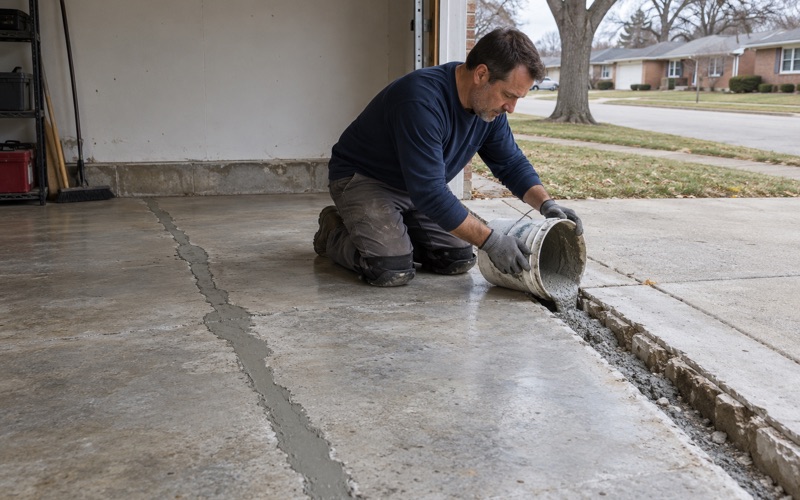
We also read the cracks and any old coating before we price anything. When a slab needs repair before it can hold a coating, we say so in writing rather than burying the problem under a fresh film.
Senior Housing on the Village’s Own List
The Village of Bellwood names three senior residences in its own hazard-plan profile: Georgina Lane, Bellwood Senior Suites and Bellwood Senior Apartments. We have not worked in any of them and make no claim about their floors. We mention them because the village itself counts housing for residents who move carefully as part of its picture, and that shapes how we approach any shared floor here.
Eighty Apartments at Washington Boulevard and 25th Avenue
The newest of the three, Bellwood Senior Apartments, stands at the corner of Washington Boulevard and 25th Avenue on the site of a former Walgreens. It is a four-story, 73,228-square-foot building with 76 one-bedroom and four two-bedroom apartments for residents 62 and older.
First move-ins were scheduled for August 2023, and the ribbon-cutting was held on December 13, 2023. A building that new has years of service ahead of its common floors, which is exactly when the question of slip resistance in corridors and shared rooms deserves a careful answer rather than a glossy one.
Washington Boulevard also carries Bellwood’s Village Hall at 3200 Washington, and the building sits on a boulevard corner rather than a side street. For a crew, that means planning material deliveries, a trailer and a grinder’s dust collector around a working intersection.
What a Building Like This Means for Floor Work
Senior housing like this is not a market we can describe in one sentence, and we will not pretend every building in the village has the same needs. What we can say is that when a manager asks us about a common-room floor, the first conversation is about how people walk, not what color the flake should be.
Those conversations usually involve someone other than the residents: a property manager, a maintenance lead or an owner’s representative. We put the same written scope in front of all of them, so the decision about texture and sheen is made once and recorded rather than renegotiated on the morning of the job.
Looking for epoxy-flooring closer to River Forest? See Epoxy-Flooring Services in River Forest.
Texture, Sheen and a Floor Walked On With a Cane
No coating makes a floor impossible to slip on, and we do not sell one as if it did. Slip resistance on a resinous floor comes from three things working together: the texture built into the system, how the floor is cleaned and maintained, and what is on the feet crossing it. We can control the first, advise on the second and only acknowledge the third.
Broadcast and Aggregate Choices
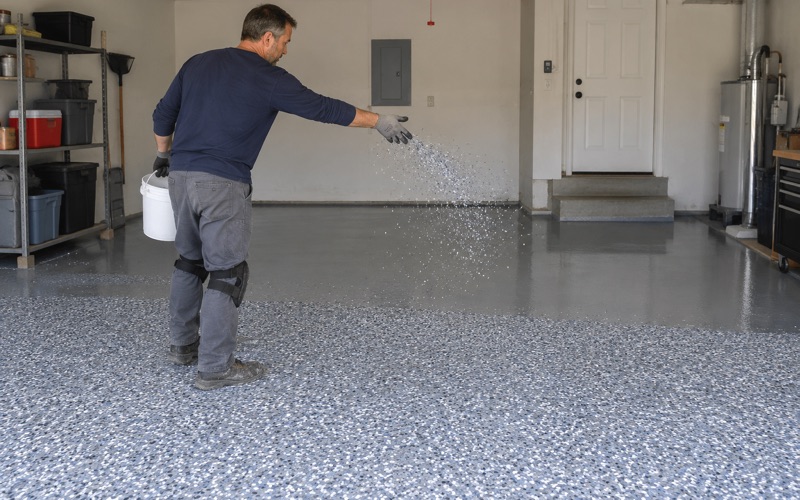
On a common-room or corridor floor we usually build texture with a quartz aggregate broadcast into the base coat, then lock it in with a topcoat thin enough to leave the grit standing proud. A full vinyl flake broadcast can also carry a fine aggregate in the clear coat, which suits a room where appearance matters as much as footing.
The trade-off is real and we explain it before anyone signs. A coarser texture grips better under a rubber cane tip or the legs of a walker, but it holds more dirt and takes more work to mop, so a building with a light cleaning schedule may be better served by a finer grit it will actually keep clean.
Why Sheen Matters to Older Eyes
A high-gloss topcoat reflects ceiling lights in long streaks, and on a corridor floor that glare can look like standing water to someone whose eyesight has changed. For shared floors in senior housing we lean toward a satin or matte polyaspartic or urethane topcoat, which also hides the fine scuffs a glossy finish shows.
None of this is a rule we read in a Bellwood code. We have not seen any village requirement for floor texture in senior housing, so these are recommendations a manager can accept, adjust or decline, and the proposal records which one they chose.
Cleaning That Keeps the Grip
A textured floor stays textured only if it is cleaned the right way. A neutral cleaner and a pad suited to the topcoat keep the grit working, while wax or floor polish laid over a broadcast surface fills the texture and turns it slick again. We raise this with the maintenance staff before the job is handed over.
Footwear is the third part, and the one no installer controls. A smooth-soled slipper on a wet floor is a risk on any surface, which is why we talk about entry mats and spill response alongside the coating itself.
Working Around Residents Who Cannot Move Out
In an occupied building, the residents stay home while we work. Unlike a vacant unit or an empty garage, a senior apartment building cannot clear its hallways for a week, so the job is planned as a sequence of small closures rather than one big shutdown.
Phasing Corridors and Common Rooms
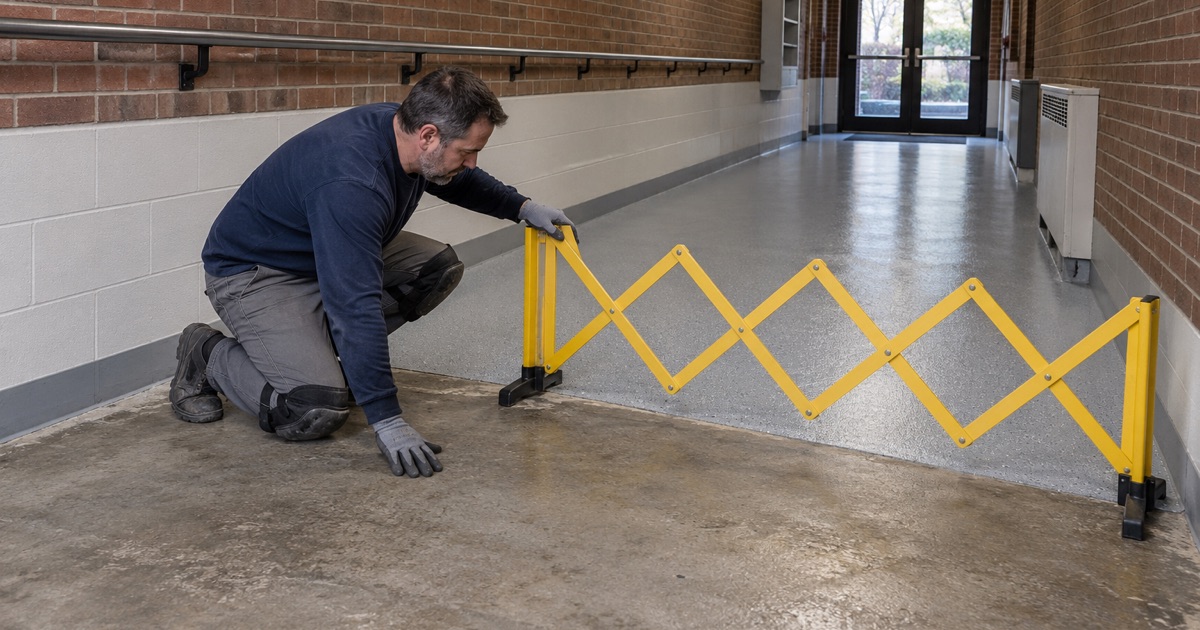
We split a corridor or lobby into sections so there is always a dry, open route to every apartment door and to the exits. Marked barriers and posted times go up the day before, and each section is finished and walkable before the next one closes.
Before work starts we ask the manager which apartment doors belong to residents who use a walker or wheelchair, so the phasing plan keeps those routes open first and gives those households the most notice.
A fast-cure polyaspartic topcoat is often the right call here, because it can take light foot traffic within hours rather than the day or more a standard epoxy needs. Curing is still scheduled against slab temperature and dew point, not a calendar promise, and we say so up front.
Odor, Air and Fire Department Access
Solvent odor travels down a shared corridor quickly, so we choose 100% solids epoxy and low-odor topcoats, and every product falls within the Illinois limit on VOC content for architectural coatings. We also ask the manager which doors and windows can be opened and when, and we plan ventilation around that answer.
Exit routes stay clear for the whole job. The Bellwood Fire Department is the village department that would answer a call at the building, and a coating crew has no business narrowing the path its firefighters or the residents would use.
Hours and Paperwork
Work runs inside the hours the village allows for construction noise, and grinding is scheduled for the middle of the day rather than the early morning. On a home job we provide a written contract and the Home Repair: Know Your Consumer Rights pamphlet before work starts, as the Illinois Home Repair and Remodeling Act requires.
Illinois does not license flooring or coatings contractors, so we show whatever registration, bond and insurance the village asks for instead of a license number. For a managed building, the certificate of insurance goes to the owner before the first barrier goes up.
Garages and Service Rooms Behind the Lobby
The floors residents see are rarely the only ones a building owns. Maintenance shops, trash rooms, mechanical rooms and parking garages sit behind the lobby, and they take a different kind of abuse: carts, dropped tools, cleaning chemicals and tires carrying road salt.
Back-of-House Floors
For a service room we build for chemical and impact resistance first, often with a thicker epoxy base and a broadcast that gives a maintenance crew footing when the floor is wet. Where a floor drain or sump pit sits in the room, we detail the coating into it carefully so water leaves the floor instead of creeping under the edge.
Commercial work is scheduled around the hours a building has to stay open, and a residential building never closes, so service rooms are done in phases around trash pickup and the maintenance crew’s own shifts.
Garage Slabs and Winter Brine
Garage slabs in a building or behind a house take the calcium chloride brine and rock salt that tires carry in, and a thin paint-grade coating will not survive that for long. We build garage floors with a ground profile, a base coat at the thickness the proposal names and a chemical-resistant polyaspartic topcoat that resists hot tire pickup.
Testing Before Coating
In Bellwood, 69.9 percent of housing units were built before 1960, decades ahead of the under-slab vapor retarder practice ASTM E1745 describes. On slabs that old we test moisture with ASTM F2170 relative humidity probes or ASTM F1869 calcium chloride tests before quoting a system, and we read the warranty exclusions aloud with moisture named first.
A coating follows the slab beneath it, so it will not stop a crack from moving, and we say that before the job instead of after. A newer slab gets the same test, because the model code lets a garage be poured with no vapor retarder at all.
Codes and Specifications
The village reports its building code as the 2006 IBC, adopted in 2008, and its Building Department is the building authority. A coating specification copied from a project in a town on a newer code edition does not carry over automatically, so on commercial work we confirm with the owner and the village what applies before we write the scope.
- 20+ Years Coating Concrete
- Moisture Tested Before We Coat
- Free Written Estimates